The Cost of Blonde
Olha Bielousova on the moment a colorist has to say no — and why that decision is the mark of real expertise.
There is a story the industry knows well, even if no one talks about it loudly enough.
A client sits down and asks for icy platinum — in one session. The colorist, wanting to
deliver, obliges. The bleach goes on. The timing extends. And then, at the sink, something
goes wrong. The comb meets resistance. Then none at all. Because the hair is no longer
there to resist.
This is not a rare story. It is one of the most documented patterns in professional coloristry —
and it almost always begins the same way: with a colorist who prioritized the result over the
hair that was supposed to carry it.
I have built my entire practice around refusing to be that colorist.
What Blonde Actually Requires
Lightening hair is a chemical process that penetrates the cortex, dissolves melanin, and permanently alters the hair's internal structure. Every session of bleaching reduces the hair's elasticity, increases porosity, and depletes the proteins that give it tensile strength. Done carefully, with appropriate timing, formulas, and intervals — this process is manageable. Done aggressively, or repeated too quickly on already-compromised hair — it is irreversible.
The industry has a term for what happens at the extreme end: chemical cut. The hair does not break. It dissolves. And no treatment, no matter how advanced, can restore what is no longer there.
What separates a responsible colorist from a reckless one is not skill with a brush. It is the ability to read what is in front of them — and the willingness to act on that reading, even when the client's wishes point in a different direction.
"True professionalism is not about lightening hair at any cost. It is about knowing when to stop."
The Consultation That Changes Everything
Every appointment in my practice begins before any color is mixed.
I assess porosity — how open the cuticle is, and therefore how aggressively it will absorb and lose pigment. I look at color history: previous chemical services, box dye, heat damage, overlapping bleach applications. I evaluate elasticity by stretching a wet strand and watching how it responds. I ask about the client's maintenance routine, their heat styling habits, the water quality where they wash their hair.
All of this before a single formula is considered.
This is not overcaution. It is the foundation of predictable results. A colorist who skips this step is not working faster — they are working without information, which means every decision that follows is a guess.
The goal of the consultation is not to find reasons to say no. It is to build a realistic map of what is possible — and then to design a path that gets the client where they want to go without destroying what they started with.
When the Answer Has to Be: Not Yet
The hardest conversation in coloristry is the one where you tell a client that the shade they want is not possible today.
The industry has documented this pattern clearly: the most severe cases of bleach damage occur not when a colorist lacks technique, but when they proceed despite warning signs — highly porous hair, prior chemical services within recent weeks, existing breakage at the mid-lengths. In each of these situations, the professional thing to do is to stop, explain, and propose a timeline rather than a shortcut.
I would rather preserve the strength, elasticity, and length of a client's hair — even if achieving the desired shade takes three sessions over several months — than deliver an icy white result in one visit at the cost of their hair's future.
This is not a conservative philosophy. It is a technical one. Hair that has been over-processed cannot hold tone, cannot reflect light cleanly, and cannot be styled without further damage. The beautiful blonde a client imagined becomes a maintenance crisis within weeks. The colorist who created it has not served their client. They have simply given them a problem they will spend months trying to solve.
Color as Science, Not Intuition
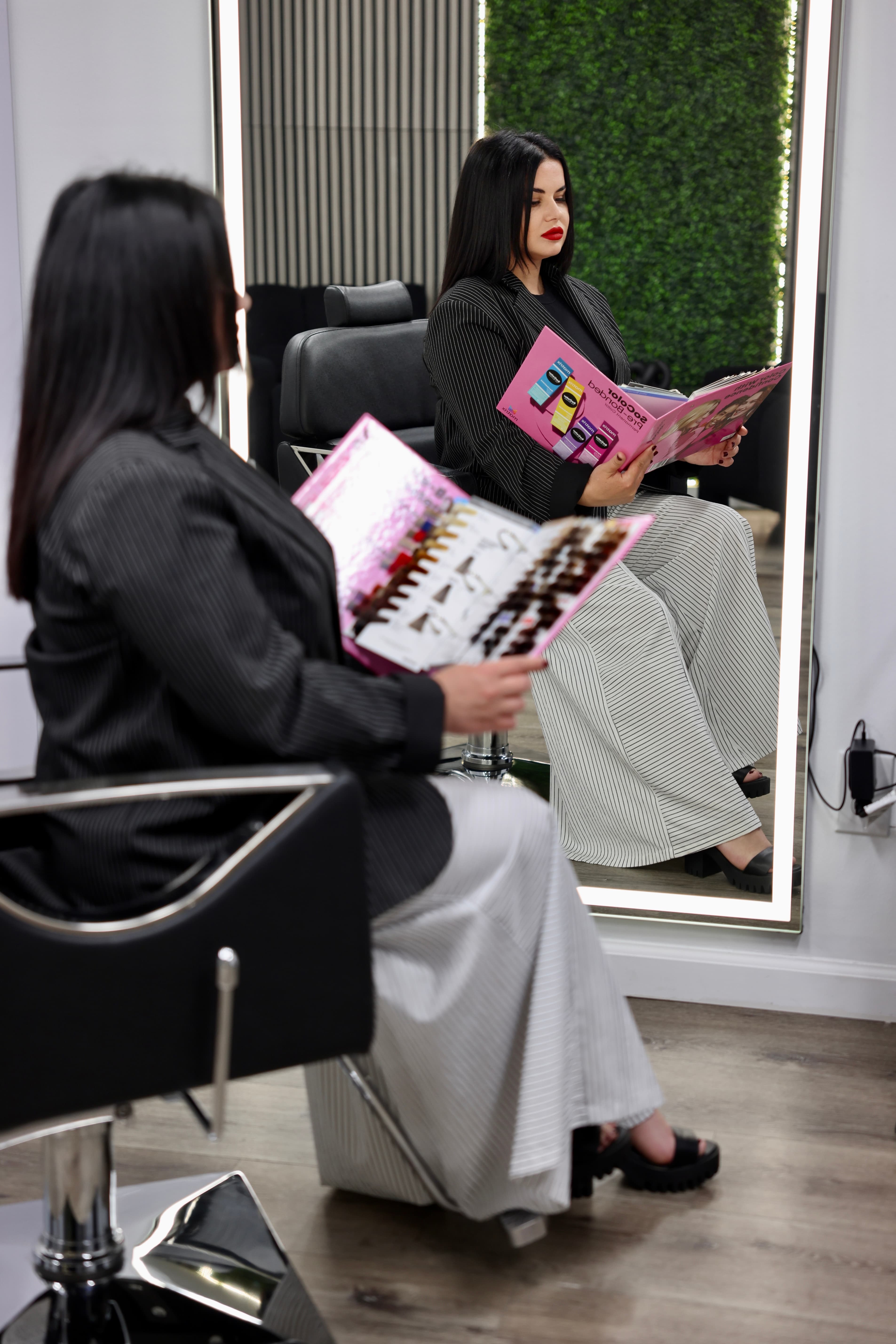
Hair color is chemistry. Pigment interaction, oxidation levels, the relationship between developer concentration and lift, the behavior of different hair structures under the same formula — these are not matters of feel or experience alone. They require genuine technical understanding.
My years working with professional color systems deepened my respect for formulation as a discipline. The difference between a formula that achieves a clean, luminous blonde and one that produces brassiness, uneven lift, or breakage is often a matter of precise developer selection, timing, and application sequence — not the shade on the color card.
Individual formulas matter. What works on one client's hair will not work on another's, even if they are sitting side by side asking for the same result. Porosity, underlying pigment, hair density, previous chemical history — all of these variables require a formula that responds to them specifically, not one that ignores them in favor of convenience.
"Color should enhance hair — make it more alive, more luminous, more like the best version of itself."
What I Am Actually Doing When I Color Hair
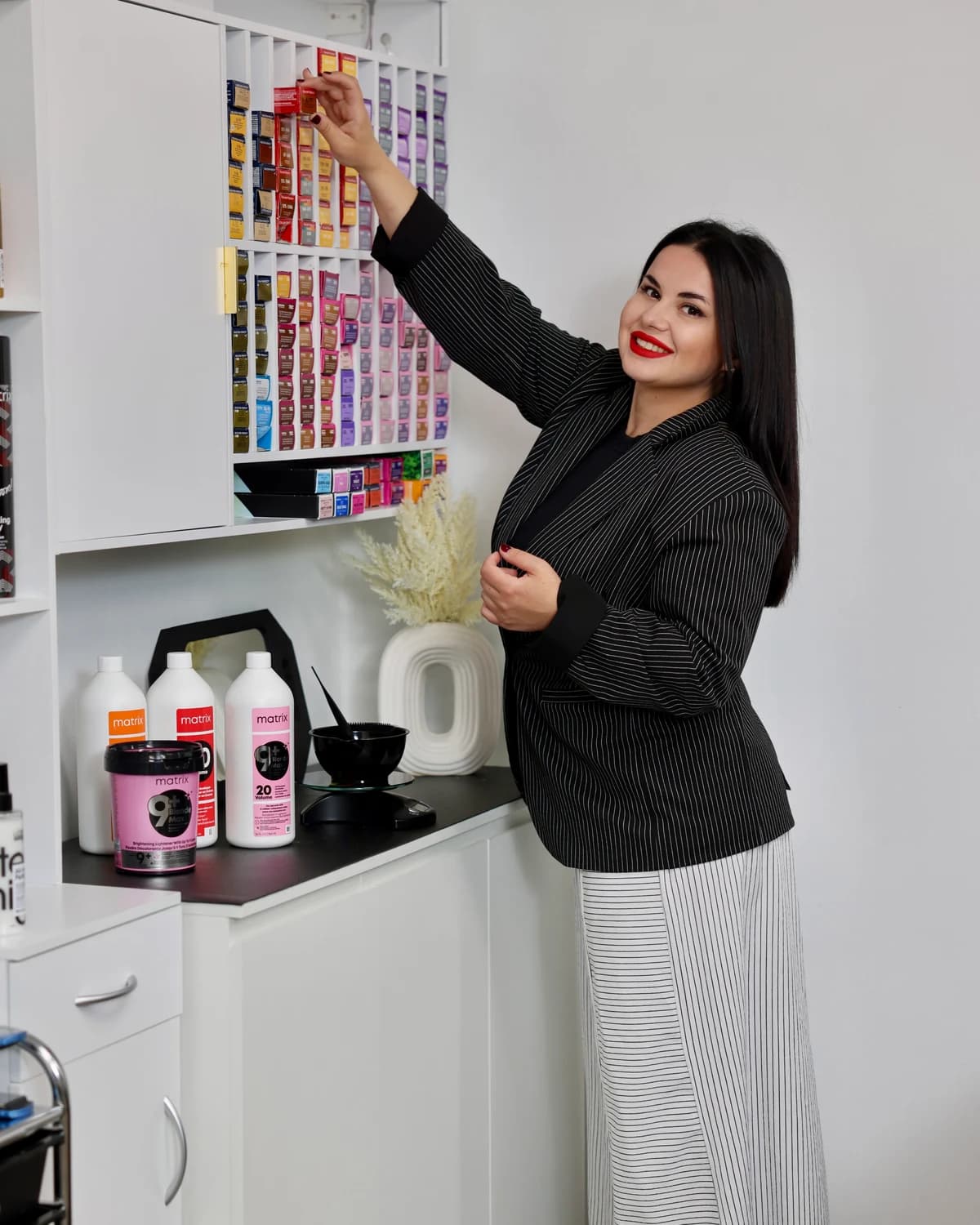
I am not creating a photograph. I am making a decision about a living structure that my client will wear every day — in different light, in different weather, after washing and heat styling and sleeping and swimming.
My standard is not how the hair looks when the client leaves my chair. It is how it looks and feels six weeks later. Whether it holds its tone. Whether it maintains its condition. Whether the client comes back not because something went wrong, but because something went right.
Color should enhance hair. It should make it look more alive, more luminous, more like the best version of itself. When it does the opposite — when it produces dullness, fragility, or the kind of damage that sends a client searching for a corrective colorist — something has failed. Not the client's hair. The colorist's judgment.
True professionalism in color is not about what you can achieve. It is about knowing what you should not attempt — and having the expertise to explain the difference.
Olha Bielousova is a professional hair
colorist with over 15 years of experience,
specializing in advanced coloring techniques
and responsible blonde transformations.
She works with individual formulas,
professional-grade protocols,
and a single guiding principle:
the health of the hair is never negotiable.