
The Art of the Invisible
Dilyara on American inspiration, Michelin discipline, and the catering company she built — and now runs from California.
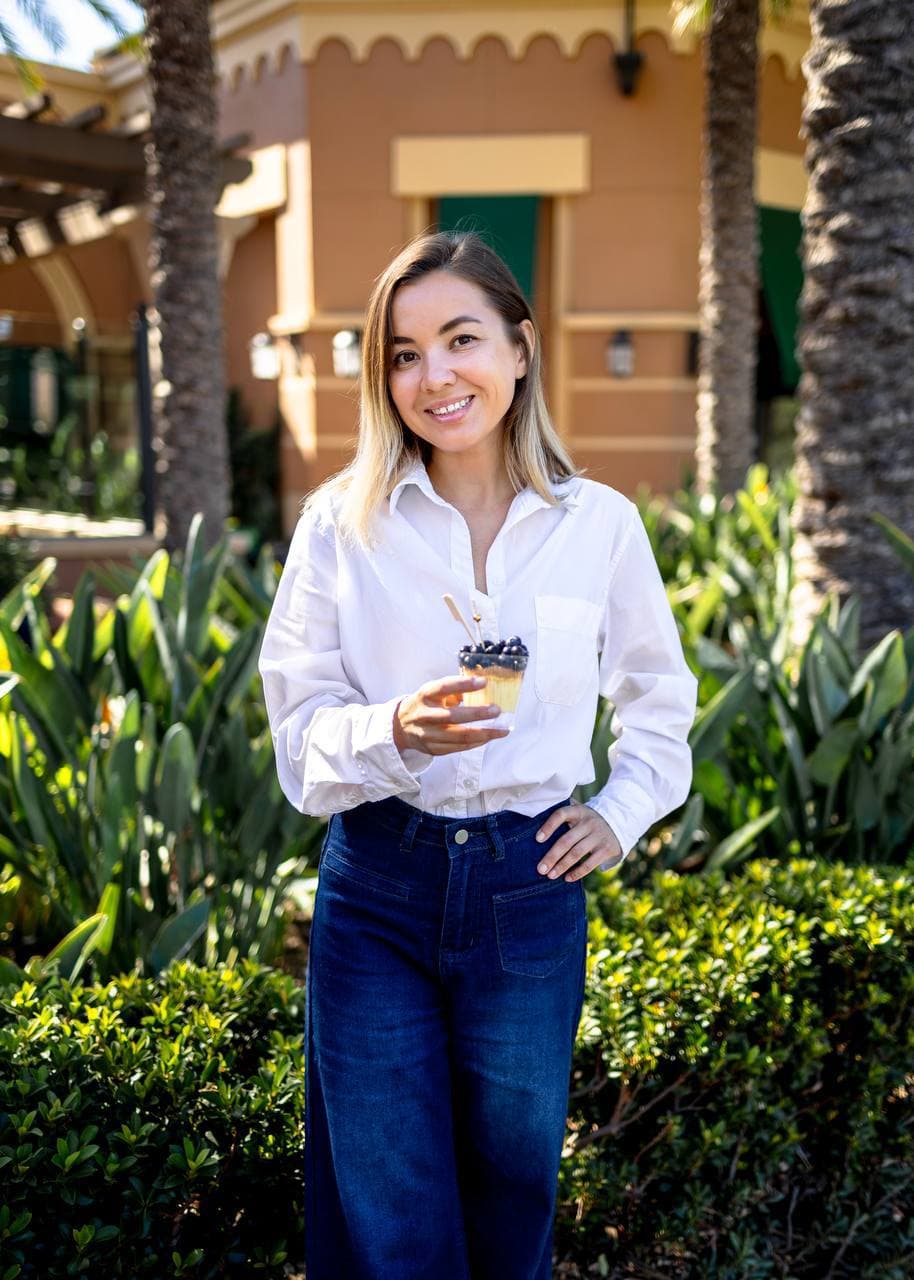
Some businesses begin with a business plan. Some begin with a gap in the market. Dilyara's began with a feeling — one she picked up in America and could not stop thinking about on the flight home.
The feeling was simple: that food at an event could be an experience, not just a function. That the table, the service, the way a plate arrives — all of it could be thought through, designed, felt. That a guest could leave not just full, but genuinely moved by something they could not quite name.
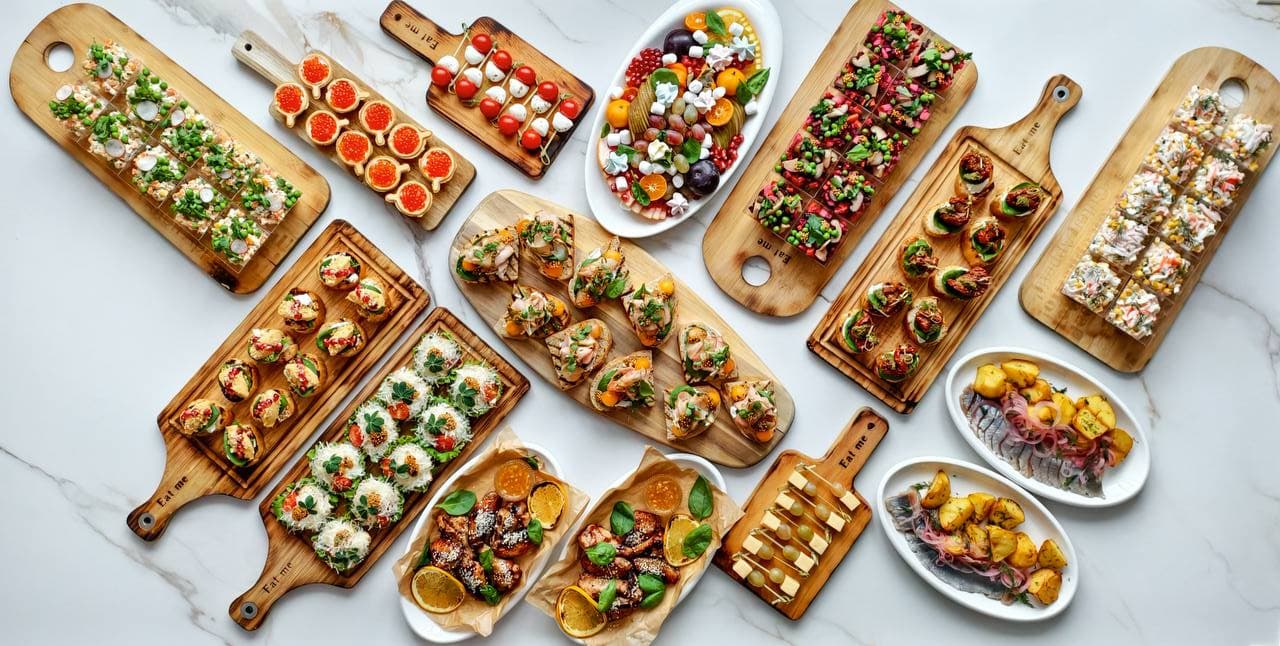
She came back to Kazan and, together with her partner Adele, turned that feeling into Eat Me — a catering company that has since served intimate family dinners and events for three thousand guests, worked alongside the Kazan Kremlin and National Geographic, and built a reputation on a principle Dilyara holds without compromise: the more complex the operation, the simpler it should look to the guest.
Today she runs Eat Me remotely from California. We spoke about what it takes to build a business that works without you in the room — and what American service culture taught her that no textbook could.
You and Adele launched the catering business during your student years, inspired by what you had experienced in the United States. What was it about American service culture that made you want to bring it back to Kazan?
I think it was the attitude toward service itself. When I was in America, I saw that an event — and the food at an event — could be perceived in a completely different way. It was not just: cook the dishes, put them on the table, done. It was an entire experience where everything mattered: how the table looked, how guests were greeted, how the food was presented, what the tableware felt like, how thoughtful and comfortable the whole thing was. I wanted to bring exactly that feeling to Kazan. When Adele and I started, we never wanted to be just a company that cooks food to order. We wanted to create the whole event. So that a client could tell us where, when, how many guests, and roughly what they liked — and from there, we would figure out everything else. That idea has never really left us. We always try to make sure the client arrives at their own celebration as a guest. We are the ones thinking about where the table goes,when to bring the dishes, how to keep the food at the right temperature, who greets the guests, and what needs to be collected afterward. For me, that is what service actually means.
You could have launched by intuition alone — but instead you pursued training, certification, and a deep understanding of kitchen technology from the inside. Why was it important to you not to skip that part?
I simply cannot engage with something without understanding how it works internally. If I am selling food, I need to understand how it is prepared. If I am building a menu, I need to understand the technology. If I tell a chef that a dish should look and be served a certain way, I need to know whether that is actually achievable — not once, for a beautiful photograph, but three hundred times in a row at a live event. That is why it mattered to me to study, to take courses, to work with the product myself, to understand kitchen technology from the ground up — from procurement and preparation all the way through to what happens to a dish during transport and what it looks like an hour after it was made. Catering is fundamentally different from a restaurant. In a restaurant, the kitchen is there, the equipment is there, the guest comes to you. In catering, everything is reversed. You have to bring your restaurant to the guest. Sometimes to a location where there is nothing at all. So now, when we develop new menu items, I always look at a dish from several angles. Of course it has to be delicious and beautiful. But it also has to be technically executable at scale — possible to prepare in large quantities, transport correctly, and deliver to the guest exactly as we imagined it.
Your first event was for friends and family — and the demand followed naturally. Was there a specific moment when you understood this had stopped being a service for people you knew and had become a real business?
I do not think there was a single day when we woke up and said: this is a business now.
It happened very gradually. First we did an event for our own circle. Then someone recommended us. Then friends of friends. Then people we had never met. And that, I think, was the real turning point. When a complete stranger calls and says: someone recommended you — I would like to book an event — you understand that something is working beyond personal connection. Word of mouth started moving on its own. People came back. They brought others. Repeat bookings appeared. The events grew larger. And at some point we simply realized that this had long since stopped being the story of two friends who cooked beautifully for their acquaintances. We had a real product — one people were willing to pay for and recommend to others.
Today Eat Me is a team of chefs, decorators, logistics specialists, and managers. How did the transition happen — from two women doing everything themselves to a structure with clear zones of responsibility?
Very gradually. And not always easily.
When you start a small business, you genuinely do everything yourself. Adele and I would design the menu, go buy the ingredients, cook, pack the tableware, load everything, drive to the venue, set the table, and then collectit all again afterward. In the early stages, that is normal. More than that — I think it is useful, because later you understand precisely what goes into every person's role in the team. But when the volume of orders grows, you realize it cannot continue this way. There is simply not enough time. And if you keep trying to control and do everything yourself, the business stops growing. So people gradually appeared. A separate kitchen team, decorators, managers, staff responsible for order preparation, logistics, tableware, cleanliness. And one of the hardest things for me personally was learning to delegate. When you have always done everything yourself, it feels faster to check it yourself, call yourself, fix it yourself. But at some point you understand that your role has changed. It is no longer to do everything with your own hands. It is to build a system in which every person understands their zone of responsibility and is accountable for the result.
You work with intimate family dinners and with events for three thousand guests — and with partners like the Kazan Kremlin and National Geographic. What actually changes, technically, when the scale grows by an order of magnitude?
Almost everything changes.
At a small event, there is still room to solve something on the spot. Move something, bring something extra, adjust the presentation. When you are dealing with hundreds or thousands of guests, that possibility essentially disappears. Everything has to be calculated in advance. It becomes pure mathematics. How many kilograms of product need to be ordered, how many hours will preparation take, how many refrigerators, vehicles, thermal containers, dishes, tables, and staff are needed. What time does one team begin cooking, when does the next one come in, when does packing start, when does loading begin, when do we leave.
Even the menu for a large event is composed differently. You have to think not only about what tastes and looks good, but about what can realistically be prepared and delivered simultaneously to that number of people. And the most important thing is that the guest should see none of this. They should not know how many vehicles arrived through the night, how many people spent days on preparation, how many spreadsheets were built. They should simply arrive, receive their food on time, and experience a beautiful event. That, I think, is what good organization actually looks like. The more complex everything is on the inside, the simpler and more natural it should feel to the guest.
"The more complex everything is on the inside, the simpler and more natural it should feel to the guest."
You have said that for you there is no principle of larger event equals more important. How do you maintain the same level of attention for a children's birthday party and a city-wide project?
Because the importance of an event has nothing to do with the number of guests, for me.A small order — fifteen or twenty people — might be a child's first birthday, a mother's anniversary, a wedding, a family day someone will remember for years. You cannot say that celebration matters less simply because there are twenty guests rather than two thousand. Organizationally, of course, these are completely different events. Different volumes, different logistics, different staffing. But the relationship to the result has to be the same. Sometimes smaller events actually require more attention to detail — because there, the client sees every single plate, every glass, every napkin. So we try not to divide clients into large and small. For me, there is an event we have agreed to take on. And if we have taken it on, we do it well.
You trained at a restaurant that later received a Michelin star and participated in programs at Rosa Khutor. What from those experiences genuinely changed how you build menus and the product at Eat Me today?
I think the main thing that kind of experience teaches is that good food does not have to be complicated. You can put ten expensive ingredients in a dish and it still may not be good. Sometimes it is far more important to take a few straightforward products, combine them correctly, and make sure each one is exactly where it belongs. It also teaches enormous discipline. In a professional kitchen, there is no such thing as it came out beautifully today and slightly differently tomorrow. There is a technique, a gram measurement, a specific result that must be reproduced exactly. For catering, this is especially critical. It is not enough to create a beautiful dish and execute it once for a photograph. We have to know whether our team can repeat it fifty, one hundred, or five hundred times. Whether it will still taste good after transport. Whether we can serve it quickly. Whether it will look as good on the hundredth portion as on the first.
So now, when developing the Eat Me menu, balance is everything to me. Taste, appearance, clarity for the guest — and always, without exception, technical reproducibility.
Your area of responsibility is the product and the management team. Why do you believe the manager is the face of the company even before the chef or the decorator?
Because in most cases, the manager is the very first person from Eat Me that a client encounters. They have not yet seen our chefs. They have not seen how we set a table. They have not tasted the food. But their impression of the company is already beginning to form. How were they answered. How quickly. Did we actually hear what they wanted. Did we ask the right questions. Did we offer a real option within their budget — or simply send them a menu and say choose. I believe very strongly that the job of a good manager is not simply to take an order and send an invoice. It is to help a person organize their event. Sometimes a client does not know how much food they need, how many tables, whether they need tableware, how many servers. They are not required to know. That is what we are here for.I want a client to finish a conversation with our manager feeling not more stressed, but the opposite: good, that question is handled, they understood what I need, they will take care of it. That is why I genuinely consider managers the face of the company. For the client, Eat Me begins with them.
Now you run the business in Kazan remotely from California. What did you have to restructure in your processes for the distance to stop being a limitation?
Distance very quickly shows you where you have actually built a system — and where everything is simply held together by your constant presence. When you are nearby, it is easy to drive to the kitchen yourself, check something, remind someone, fix something quickly. And it feels like the process is working. When in reality it is working because you are constantly inside it. When I started managing from California, many processes had to be rebuilt. Everyone needs clear responsibilities. There have to be standards, checkpoints, photographs, reporting. Managers need to know which decisions they make independently and where they need my involvement. The kitchen needs clear information from the managers. An order cannot depend on whether I personally remembered to remind someone of something. Of course, I am still very deeply involved in Eat Me. I am in constant contact with the team, working on the product, the menu, pricing, the managers, new directions. But my role now is no longer to be physically present at every event. On the contrary — for me, the sign of a well-built business is when an event can go perfectly without me on site. And in that sense, the distance actually helped. It forced us to grow up faster as a company and to turn many things that had previously relied on habit and experience into a real system.
You speak about the wow effect — when a guest receives a little more than they expected. Can you recall a specific case where that landed most powerfully?
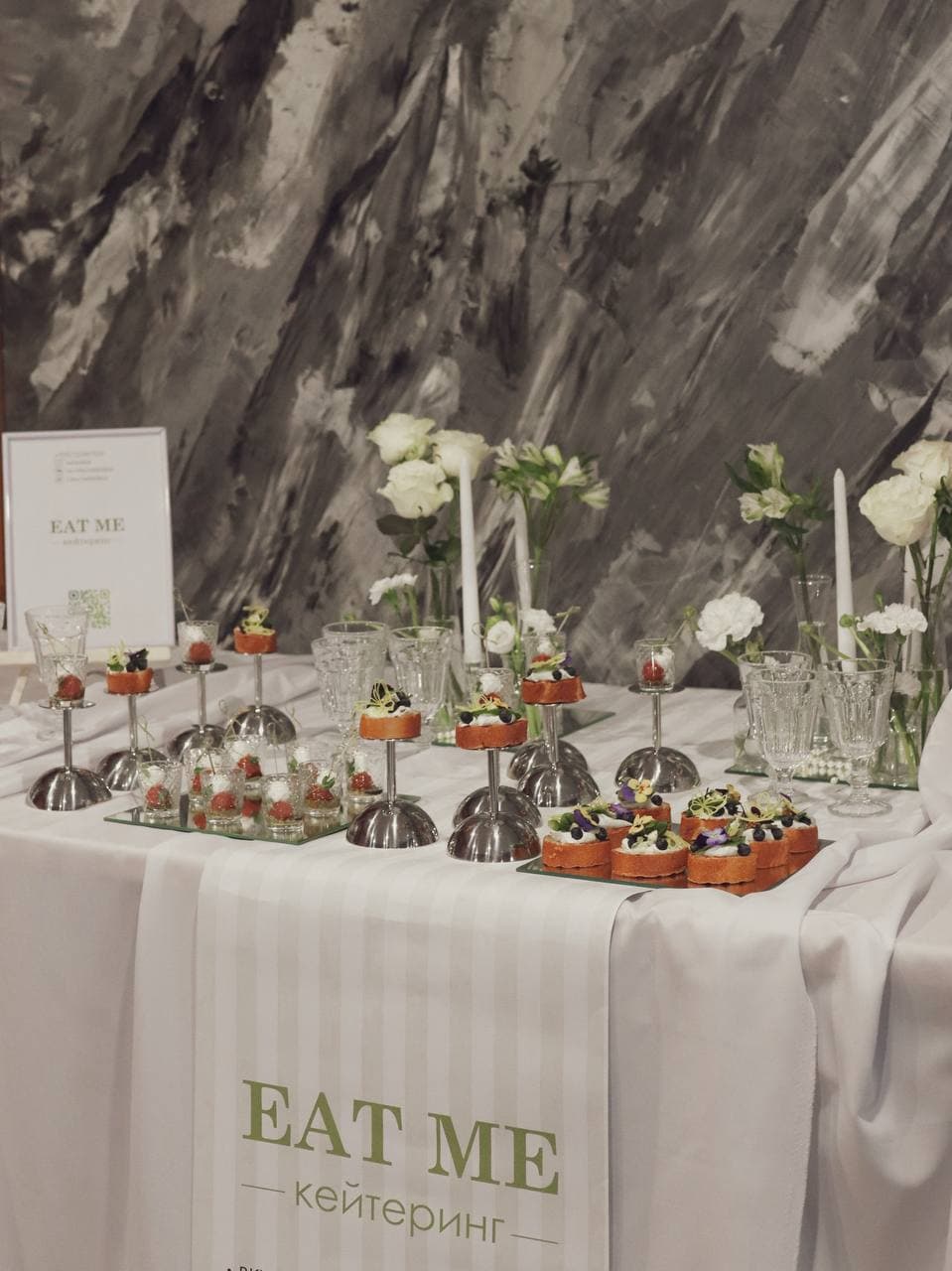
We try to make that effect present at almost every event we do. Sometimes it is something very small. An unexpected detail on the table that was not part of the original brief. A dish served in a way the client did not anticipate. A moment where everything simply comes together — and the guest looks around and feels: this is exactly right. I remember one family celebration where the client had not asked for anything elaborate. A modest brief, a modest budget. But the team found a way to add a small seasonal touch to the presentation — something in the color, the garnish, the way the table was laid. The client called us afterward and said she cried when she saw it. That it was more than she had imagined. For me, that call was worth more than any large project. Because it meant we had done what we set out to do from the very beginning: not just deliver food, but create a moment someone would remember. The wow effect is not about spending more or doing more. It is about paying attention to the person in front of you — and finding the one thing that will make their event feel like it was made specifically for them.
___________________
A Note of Gratitude
A sincere thank you to Dilyara for this conversation — for her openness, precision, and the generosity with which she
shared the thinking behind Eat Me. In an industry where the result is often all that is visible, it is rare to find someone
so willing to speak about the invisible work that makes it possible. We are grateful — and we look forward to watching
what comes next.
— Vladyslava Kovalenko and the editorial team of Beauty Professionals Magazine