The Art of the Detail
Oksana Zozulya — champion, judge, mentor on what it really takes to reach the top of the nail industry, and why staying there has nothing to do with titles.
Some people enter a profession. Others are claimed by it. Oksana Zozulya began doing nails in 2012 not with a grand plan, but with a genuine love for drawing and creating. What followed was not a straight line to the top, but something more interesting: a slow, deliberate build toward mastery that eventually took her from a nail table in Ukraine to international championship stages, judging panels across multiple continents, and a growing reputation as one of the most respected figures in the global nail industry.
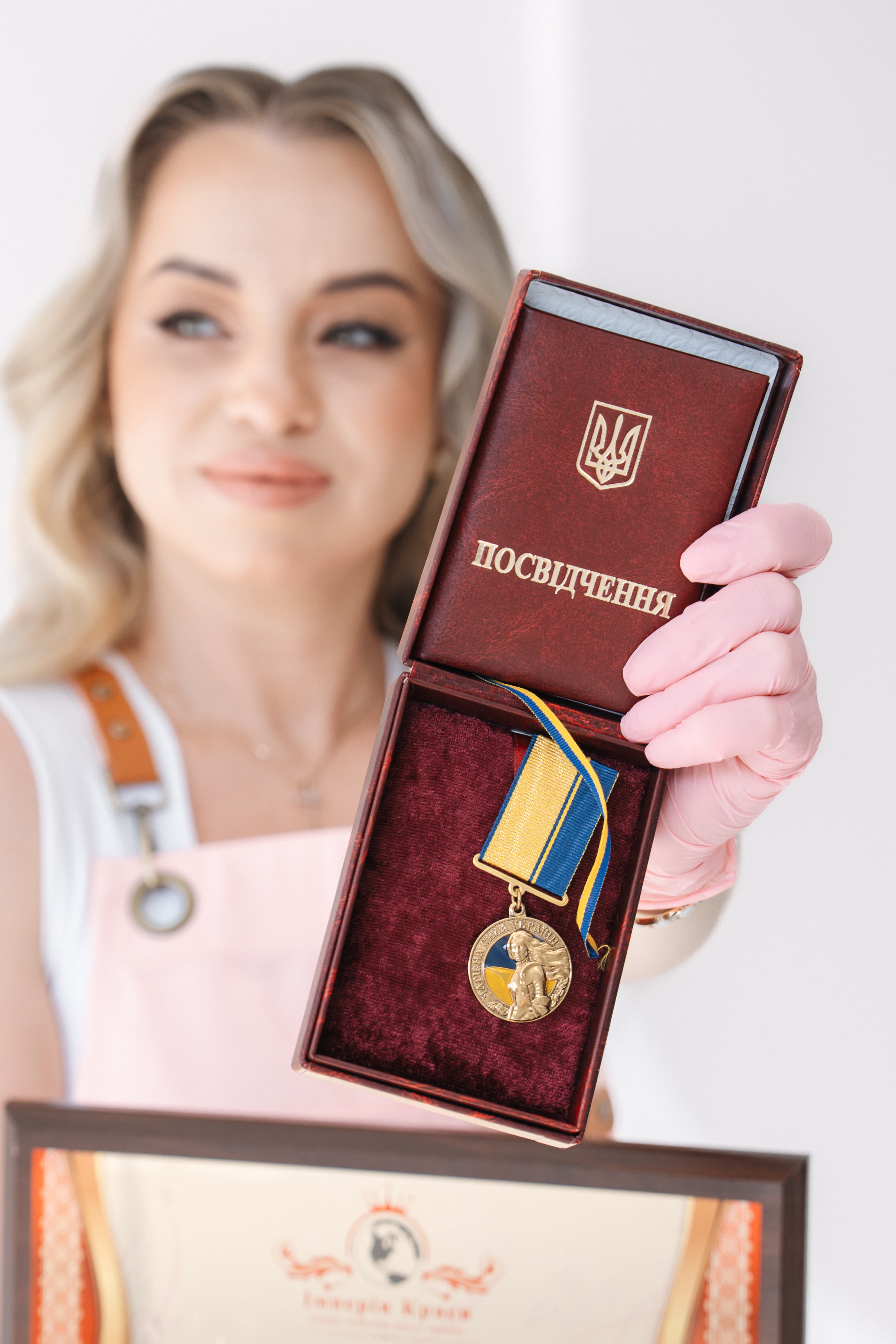
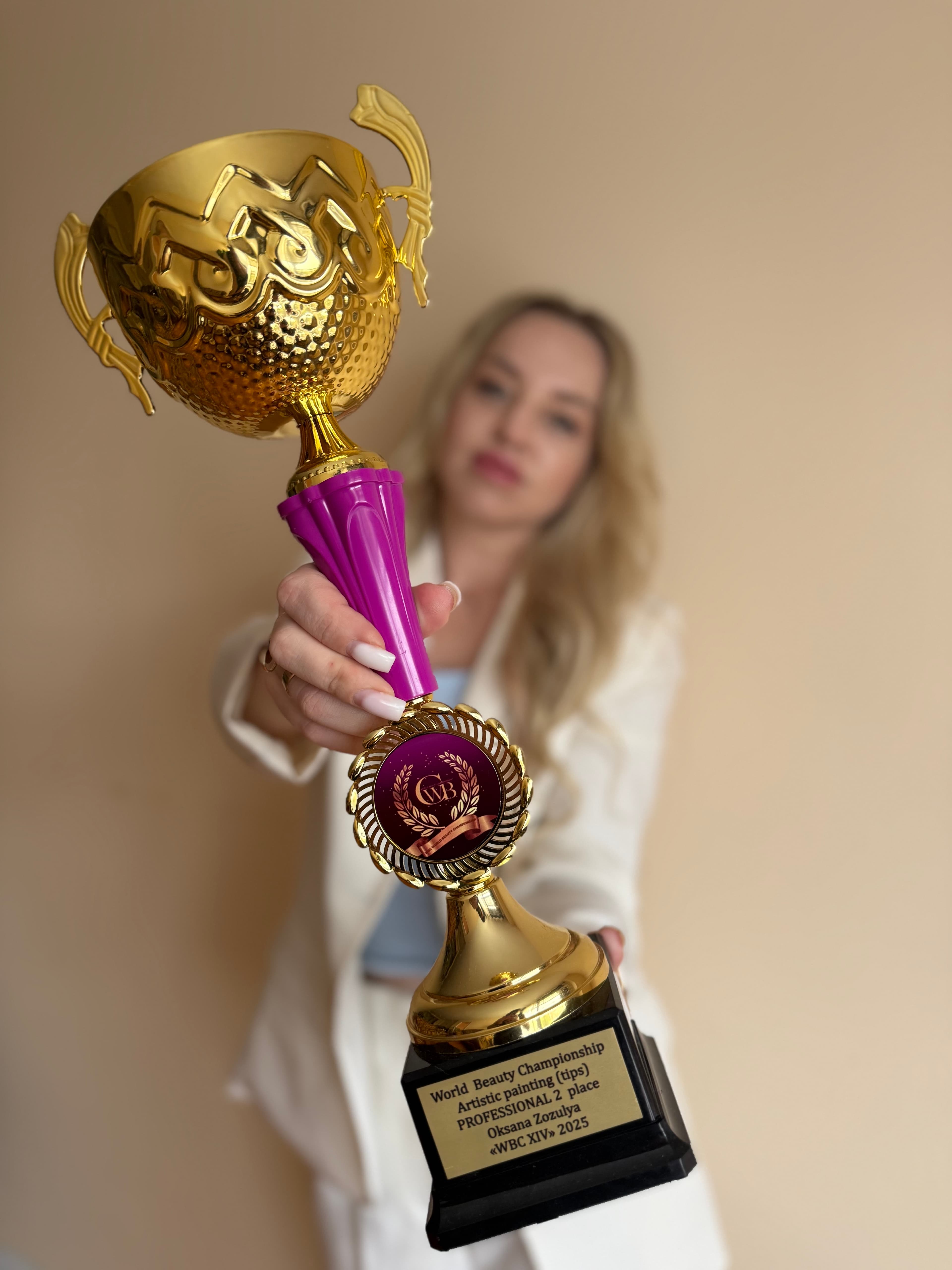
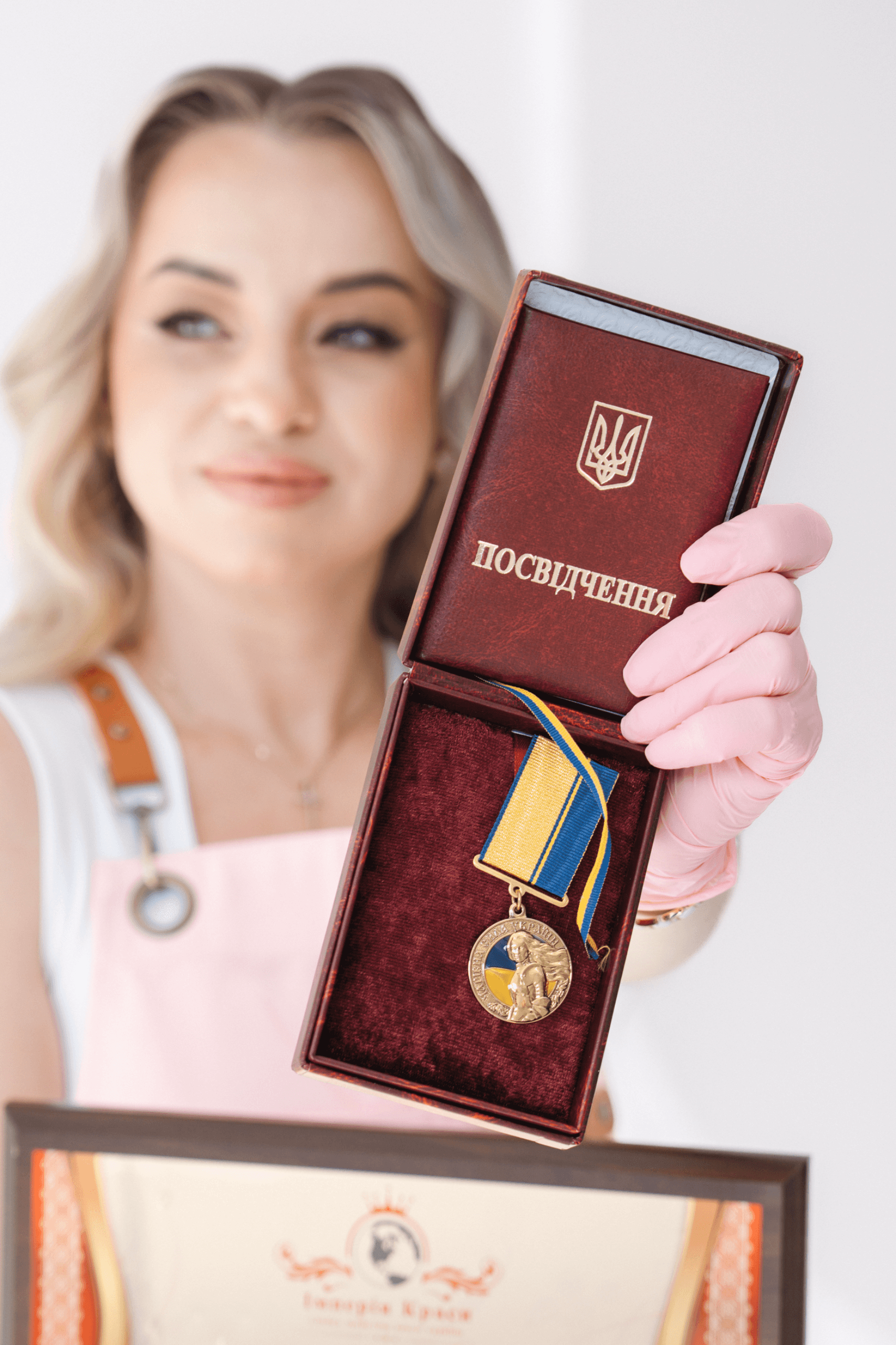
In 2025 alone, she collected titles at CMKU, WBC, Brilliant Beauty World Cup, and Global Talent Beauty Cup including the Grand Prix at CMKU XXXVIII. She holds accreditation from GCM Switzerland and a diploma from IBJA. She has been recognized with the Golden Hands of Ukraine award, named among Top 100 Women, and received the Medal of the Miraculous Power of Ukraine a distinction that speaks to something far beyond technique.
We sat down with Oksana to talk about the moment nail art became a life’s calling, what separates a Grand Prix piece from a merely excellent one, and what she actually wants now that the trophies have made their case.
THE MAKING OF A PROFESSIONAL
You entered the profession in 2012. Looking back over more than a decade — what has changed more: the technique, or you yourself?
When I started in 2012, I never imagined that nail artistry would become more than something I simply enjoyed. I loved drawing, loved creating and at first, that was enough. I practiced on my friends, learned the basics, and gradually fell into the work.
But the industry I entered then barely resembles what exists today. New materials, safer technologies, a completely different standard of service what was considered advanced in 2012 is now the baseline. The technical bar has moved dramatically.
And so have I. These years turned me into not just a nail technician, but a multiple international champion, a judge, a mentor. I can say with confidence now: this is my profession. It carries responsibility. It demands constant growth. The technique changed but more importantly, so did my understanding of what this work actually means.
Was there a specific moment when you understood that nail art wasn’t a craft, but an art form worth dedicating your life to?
It didn’t happen all at once. The realization built slowly. I had always loved what I was doing but the real turning point came after I moved to the United States and entered my first international online championship, WBC XIV. That experience gave me something I hadn’t expected: clarity. Competing at that level, I understood that what I was doing had real artistic weight. Championship after championship, that conviction only deepened. This was no longer just work. It was a life’s calling something that continues to inspire you years in, something you keep discovering.
You’ve always described yourself as self critical. What from those early years would you now call a mistake that actually became an advantage?
I am still self critical that hasn’t changed. I look at my own work, analyze it, compare. I see what others might not notice, and I correct it. What I once thought of as a flaw that relentless internal scrutiny I now recognize as one of my greatest professional assets. It taught me to see details. It taught me that true quality is not just about visual perfection, but about the balance between technique, safety, client comfort, and efficiency. That mindset is, I think, what professionalism actually looks like from the inside.
2025 was extraordinary by any measure CMKU, WBC, Brilliant Beauty World Cup, Global Talent Beauty Cup. Which of those victories cost you the most internally?
Every win is personal. Every competition demands something different preparation, doubt, the work of pushing yourself past what felt like your current limit. But if I’m honest, the one that carried the most weight internally was the Grand Prix at CMKU XXXVIII. It felt like confirmation not just of that one performance, but of the entire path. Everything the years had built.
And alongside the competitive titles, 2025 gave me something equally meaningful: the Golden Hands of Ukraine award. That one touched me differently. It recognized not just skill, but dedication years of work, and a contribution to the profession itself. It reminded me that borders are only real if you believe in them. Wherever you are, in whatever language you work, genuine professionalism finds its recognition.
The Grand Prix is a serious designation. What, in your view, separates a Grand Prix piece from work that is simply very strong?
A Grand Prix piece is not simply a work that meets every standard. It is a work that stays with you.
When judges evaluate competition entries, they assess precision, architecture, form, detail. But the pieces that rise to the top carry something beyond technical correctness they have character. They have an idea. You feel the author’s presence in them.
A skilled technician can execute flawlessly, produce something beautiful and clean. But a Grand Prix piece goes further. It makes technique into a vehicle for expression. I believe those awards go not to work that is free of errors, but to work that achieves something more than technical perfection.
After this many victories, does the feeling in the minute before results are announced still feel the same?
In that moment, I try not to think about placement or recognition. I tell myself: You’ve done everything you could. Now trust the result.
But the most valuable feeling in those minutes is not hope. It is gratitude. Gratitude for the ability to do work I love and for the opportunity to have competed at all.
You hold accreditation as a CMKU judge and also judge at WBC, NailVision, and Nail Championship. When you look at a competition entry what do you see first: the technique or the idea?
The idea comes first instinctivel There’s an immediate emotional response. But a professional judge can not evaluate on feeling alone. Within seconds, the focus shifts to technique, because technique is what reveals the author’s true level. A brilliant concept without skilled execution doesn’t hold up. And a technically flawless piece without an idea remains just that technically flawless. The strongest competition work is always both: a high level of craft and a story told through form, color, composition, and detail. When those two things meet, the piece becomes something you remember.
Have you ever found yourself defending a score arguing for a high mark when other judges had doubts?
I tend to listen before I speak. I believe in balancing a panel’s conversation rather than provoking conflict. But if I see a piece with strong execution, a compelling concept, and professional courage, I will defend my assessment not to prove a point, but because I believe it matters to support real talent and creative thinking in this profession. I try to always argue from criteria, not from personal preference. What we liked once upon a time as “too bold” is now the standard. A judge has to hold that perspective.
What is the most common reason a technically clean piece fails to make the final?
The absence of individuality. A technician can execute perfectly everything clean, everything by the rules. But when judges are comparing dozens of strong entries, technical correctness alone is no longer enough. Often, competitors are so focused on avoiding errors that they forget to show themselves. The result is work that is correct but not memorable. At the highest levels of competition, the pieces that win are not only technically impressive they surprise you. They inspire. They tell a story. My consistent advice to competitors: master your technique first, then stop being afraid to let yourself be seen. That distinction, more often than anything else, is what separates a finalist from the rest of the field.
Does judging change how you work with clients?
Completely and I think it makes me significantly more demanding of myself. When you evaluate hundreds of competition pieces, you start noticing details that might have passed before. You develop a deeper understanding of what quality actually means. But judging also taught me something important about distinction: a competition piece and a client service are not the same thing. In a championship, we pursue absolute perfection against specific criteria. With a client, everything centers on that individual their lifestyle, their preferences, their comfort. So judging doesn’t make me stricter with clients. It makes me more respectful of detail and more accountable for results. And, I think, it’s part of what allows me to keep growing professionally even after all these years.

Philosophy and Teaching
You hold GCM accreditation from Switzerland and a diploma from IBJA two very different professional frameworks. What did each give you personally?
Both were significant and they gave me genuinely different things.
GCM Switzerland taught me that there are no minor details. Every element of a piece must have logic, justification, and a high standard of execution. That training built a deeper discipline in me and the understanding that true mastery is built on consistency, not occasional brilliance. IBJA opened something different: international judging culture. It taught me to look at work more broadly, to move beyond personal aesthetic preferences, and to evaluate objectively. A good judge assesses not what appeals to them, but how well a piece meets its criteria and how fully the author’s intent is realized. If I had to put it simply: GCM taught me to perfect the work of a technician. IBJA taught me to understand and evaluate the profession on a global scale. Together, they made me stronger as a master, as a mentor, and as an international judge.
If you had to express your professional philosophy in a single sentence what would it be?
“True mastery begins where flawless technique meets love for what you do and genuine respect for the people you serve.”
Because a master’s real success is measured not in awards and titles but in the impression left on a profession, and on the lives of the clients you work with.
When you teach, what comes first technique or mindset?
Mindset, always. Technique can be learned, practiced, automated. But mindset determines what kind of professional someone becomes over the next five or ten years. I always say to those I mentor: don’t just learn how to do something understand why you’re doing it that way. Analyze. Notice details. Take ownership of your work. Never stop developing. Technique is a tool. Mindset is the foundation everything else is built on. It’s what allows a professional to grow, to adapt, to face competition without fear, and to maintain their level regardless of circumstance.
You’ve received recognition from the industry and from the broader public Golden Hands of Ukraine, Top 100 Women, Personal Brand Awards. Has the way society perceives nail professionals actually changed?
Significantly. The industry has become more professional, more technological, more intellectually serious. International championships, academies, judging programs, educational platforms, a scientific approach to nail health and safety all of this has redefined what a successful nail professional looks like.
Today, a master at the top of this field is not simply someone who executes beautifully. They are a specialist who is constantly learning, who understands quality standards, who thinks like an entrepreneur. Awards like Golden Hands of Ukraine or Top 100 Women matter to me because they reflect that shift they signal that society is beginning to recognize beauty professionals not as craftspeople, but as experts, educators, influencers, and leaders shaping their industry.
Where do you see the nail industry in five years what fades, and what remains essential?
I think the industry will become more professional and more intentional. We’re already watching the market move away from volume toward quality and that direction will only strengthen.
What I expect to fade: excess for its own sake. Overloaded designs, trend-chasing without purpose, the impulse to impress at any cost. Even now, elaborate artistic nail painting has largely become a competition format rather than everyday client service.
What will remain what never really goes out of style is flawless technique, healthy nails, refined aesthetics, and a genuinely individual approach to each client. The professionals who will be most valued are those who don’t just perform a service but create a high-level experience, build real trust, and never stop growing.In one phrase: five years from now, the industry will be less about trends and more about professionalism. I think that’s exactly the right direction. Competition grows more intense every year, and a new generation is rising fast.
What does staying at the top mean to you now?
It doesn’t mean proving I’m better than everyone else. It means being better than I was yesterday. I have enormous respect for the new generation. They are talented, bold, fast learners they bring fresh ideas and a new perspective to the profession. That kind of competition genuinely motivates me. When the people around you are strong, you cannot afford to stand still. What I’ve come to understand over the years is that real professional success is not measured in the number of titles, but in the ability to remain relevant, maintain a high standard, and continue to inspire others. Winning still matters to me. But so does passing knowledge forward supporting younger professionals, participating in the industry as a judge, a mentor, an expert. My goal is not to hold a position at any cost. It’s to grow alongside the industry, staying true to my values, my standards, and my love for this work.
The Medal of the Miraculous Power of Ukraine is a recognition that speaks to who you are as a person, not just as a professional. What does it mean to you beyond the work?
Championship titles evaluate what I’ve achieved as a master. This medal made me think about something different the mark I leave as a human being. It speaks to representing Ukraine on an international stage. To continuing to grow professionally while far from home. To showing, through example, that Ukrainian specialists belong among the best in the world. For me, it is a recognition of values: of dedication, resilience, loyalty to one’s roots, and respect for people. It reminds me that real success is not only measured in diplomas and medals, but in whether you remain someone who can inspire, support, and contribute to others. Most awards say: you achieved something. This one says: stay exactly who you are. That, I think, is one of the most meaningful things you can receive.
Beyond the Profession
If today’s Oksana could speak to the version of herself just starting out in 2012 what would she say?
“Don’t be afraid to dream bigger than what currently seems possible.”
In the beginning, success meant learning to do the work well and having satisfied clients. Life has shown me the possibilities are so much wider. International championships, judging, prestigious awards, publications, teaching, recognition across different countries — none of that was in my vision then.
I would also say: “Stop comparing yourself to others. The only person worth measuring yourself against is who you were yesterday.” At every stage, there will be people more experienced, more successful, more advanced. That’s not a threat — it’s information. I would also say: “Stop comparing yourself to others. The only person worth measuring yourself against is who you were yesterday.” At every stage, there will be people more experienced, more successful, more advanced. That’s not a threat it’s information. And perhaps most importantly: “Don’t be afraid of mistakes.” What once looked like a setback has a way of becoming a lesson, and then a door. The difficulties taught me resilience. The changes taught me the courage to move forward.
Now that the titles speak for themselves what do you actually want from this profession going forward?
Honestly, what inspires me now is not another title. It’s the possibility of leaving something meaningful behind.
Every win still brings joy still confirms that the direction is right. But with time comes the understanding that awards are not the destination. They are evidence that you’re on the right path.
I want my name to be associated not only with championships, but with professionalism, integrity, high standards, and a genuine contribution to the education of the next generation. If the goal before was recognition, the goal now is legacy. Something that will inspire people long after the moment has passed.
A Final Word
A note of deep gratitude to Oksana Zozulya for her time, her openness, and the remarkable generosity with which she shared her journey. This conversation is a reminder that behind every title is a story of quiet discipline, genuine love for a craft, and the courage to keep growing. We are honored to have told a part of it.
_______________________________________________
A NOTE FROM THE AUTHOR
When I prepared for this conversation, I thought I was going to write about nail art. About competitions, titles, technique. What I didn’t expect was to walk away thinking about something much larger about what it means to build a career with integrity. About what happens when a person refuses to let geography, language, or circumstance define the ceiling of their ambition. In an industry that moves fast and rewards the visual above almost everything else, that kind of groundedness is rare. And I think it matters not just for beauty professionals, but for anyone building something real. I’m grateful Oksana answered honestly. I hope this conversation stays with you the way it stayed with me.