Beautiful Hair Doesn’t Start With a Haircut
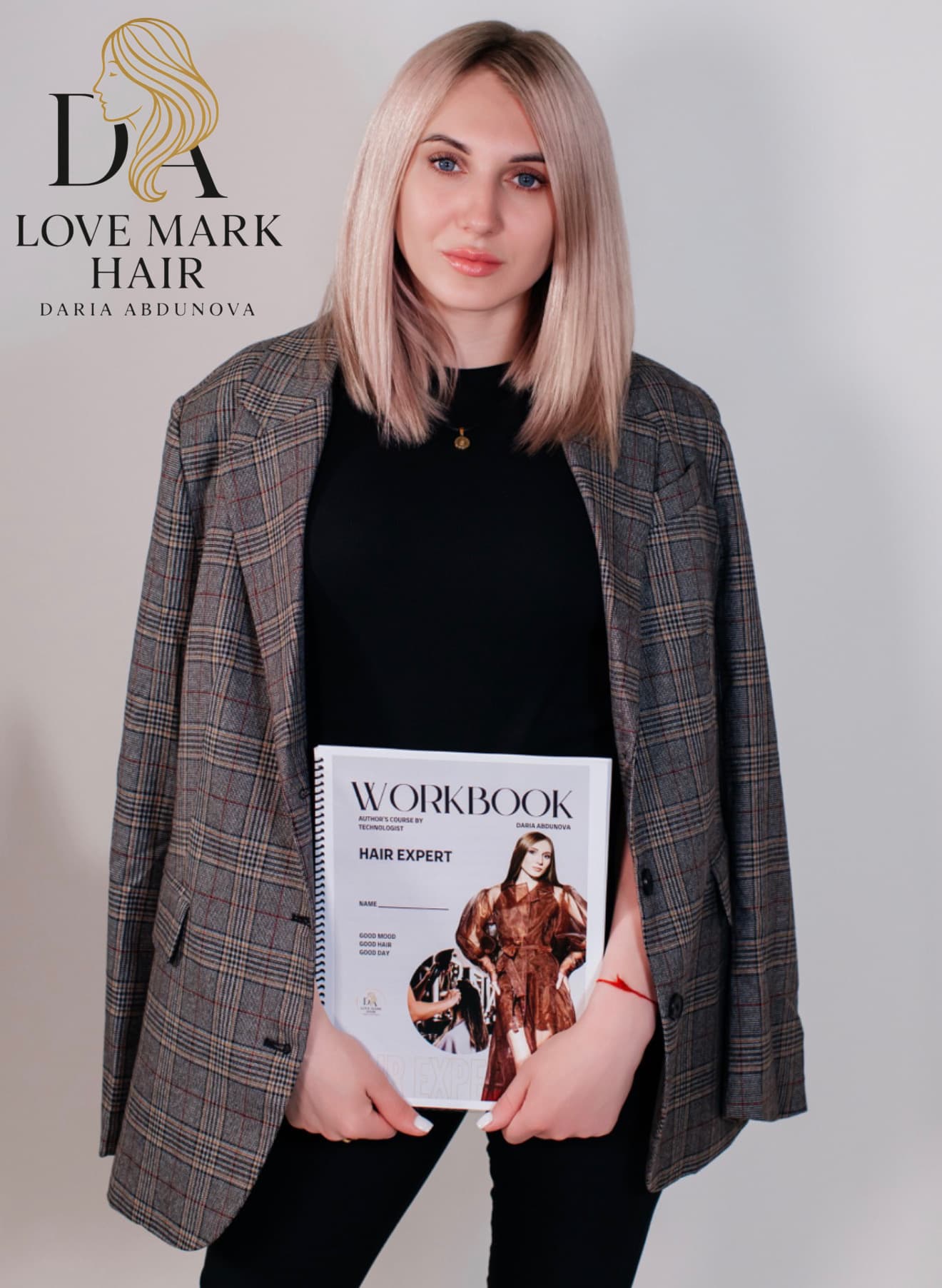
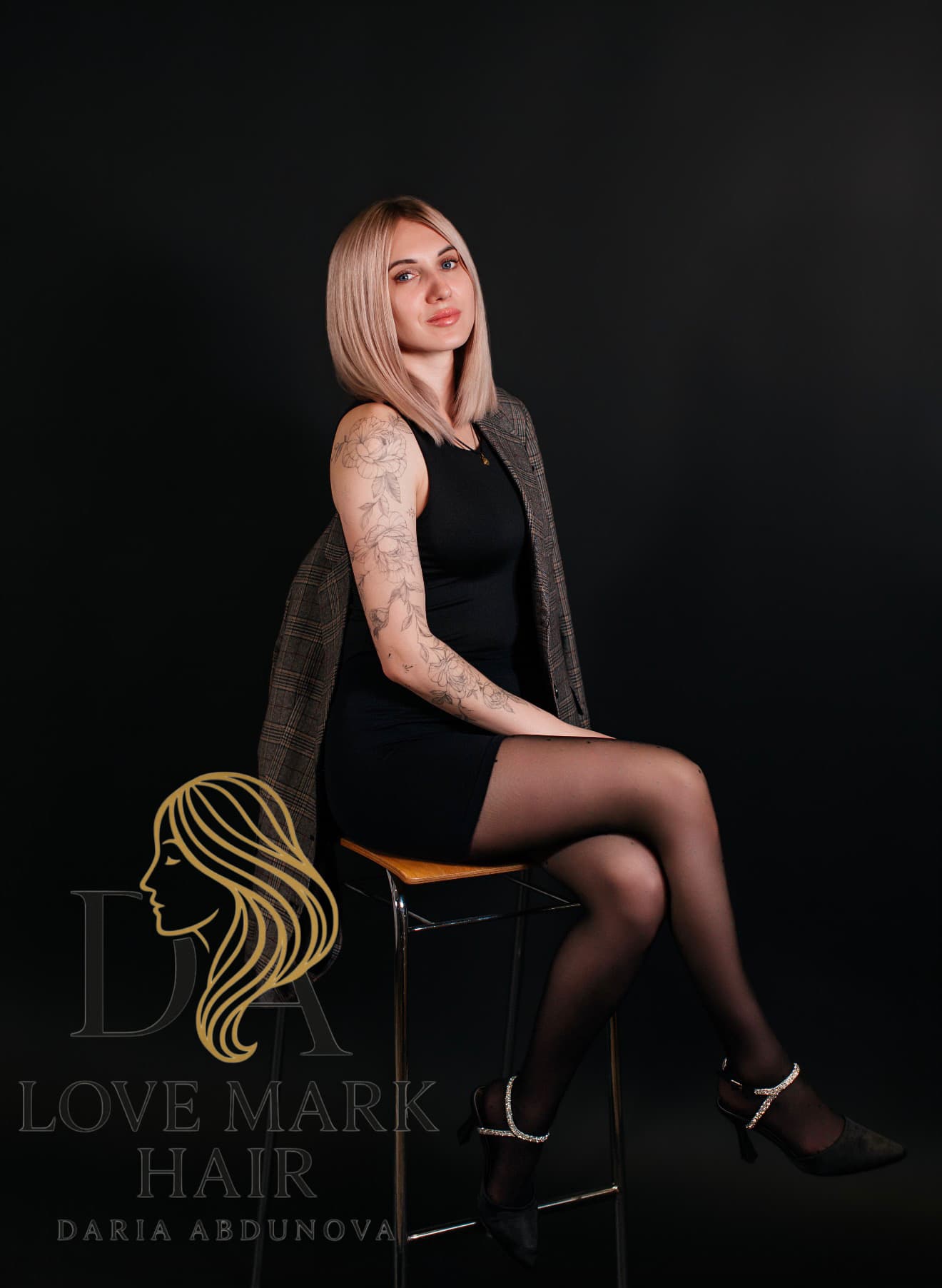
Daria Abdunova: Real Hair Health vs. the One-Visit Effect Daria Abdunova is a hair reconstruction expert, trichologist, and international beauty judge (IBIA Level 5), who built her own restoration methodology while scaling the LoveMark Hair brand in the US. In this interview, she talks scalp diagnostics, lasting results over quick fixes, and the biggest myth in hair care today.
Your work puts trichoscopy and pre-service diagnostics at the center while most stylists still operate on autopilot. Why is it non negotiable for a specialist at your level to start with the scalp rather than the length?
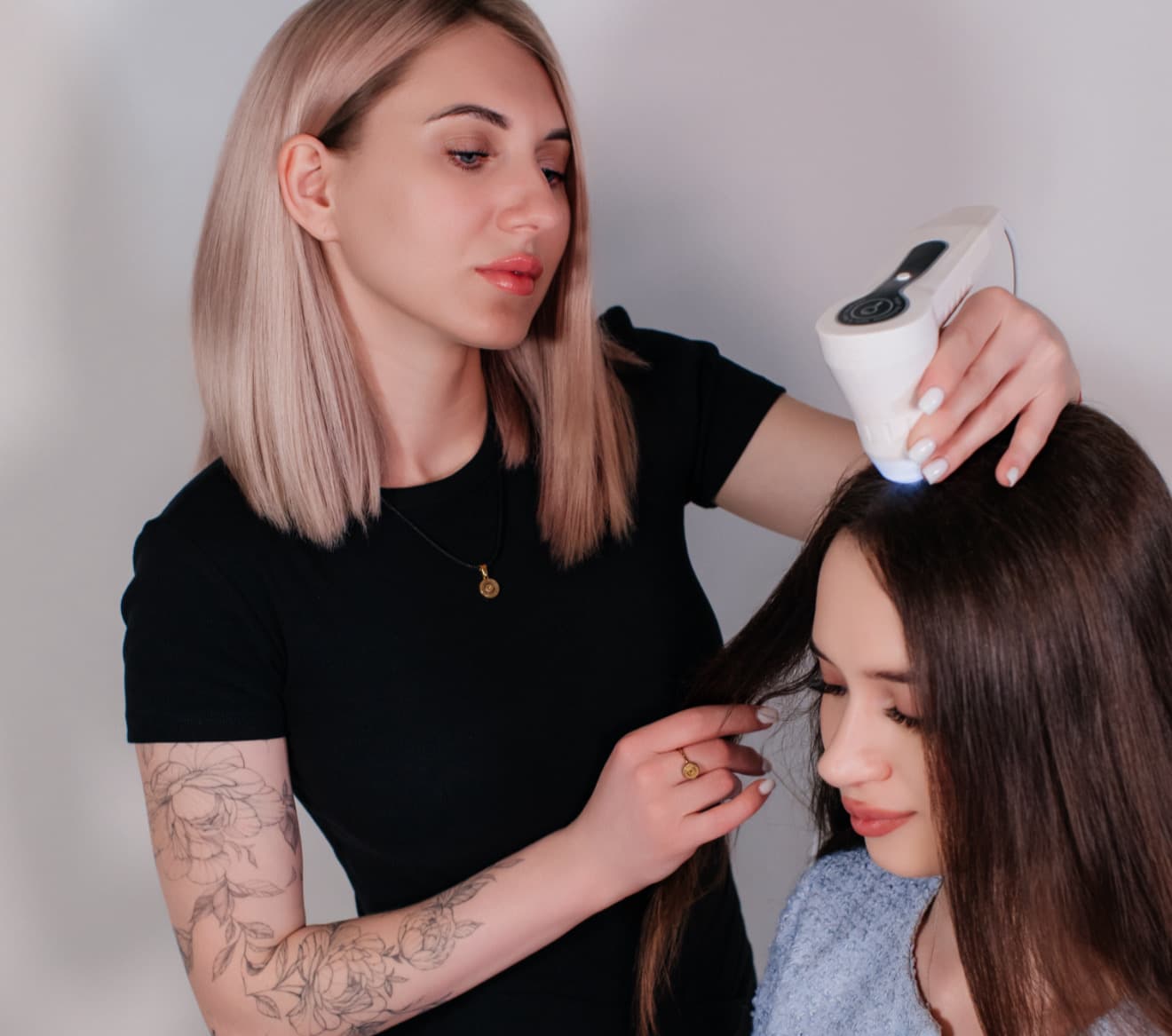
Trichology fundamentals should be part of every hair professional’s toolkit whether you’re doing color, reconstruction, or a hydration treatment. This isn’t advancedlevel knowledge reserved for a few. It’s the foundation of the craft. More often than not, a client walks in complaining about their hair and the real problem starts at the scalp. If you miss that, you can deliver a flawless visual result and still fix nothing that actually matters. Great Instagram content. Unresolved issue. Scalp diagnostics is a non negotiable first step for me I don’t begin a service without it. It shapes not just which treatment I choose, but the entire at home care routine I recommend. Because even the most skilled in salon work won’t hold long-term if the client is using the wrong products between visits. I always look at the full picture: assess the scalp condition, evaluate the hair’s structural integrity, then build a plan. Sometimes that means addressing the scalp first restoring its balance, dialing in the right home care before we even touch the lengths. That’s the approach that delivers genuinely healthy hair, not just a temporary fix.
You often talk about a systems based approach to hair health. How do you explain the difference between a “one appointment visual effect” and real, lasting hair health and how does that conversation build long-term client trust?
I’m straightforward about it: hair that looks good right after a service and hair that’s actually healthy are not always the same thing.
The market is saturated with treatments that deliver a fast payoff shine, smoothness, that freshly done look. But a few weeks out, sometimes after just a few washes, you’re back to square one. That’s not restoration. That’s temporary coverage. I don’t work for the after-photo. My goal is for the hair to genuinely improve in quality over time. So I’m always honest with clients about where their hair actually stands what’s realistically achievable in one session, and what requires a course-based approach. Sometimes the progress isn’t as dramatic as everyone hopes after the first appointment. But it’s there, and it builds. When a client starts noticing real changes less breakage, better length retention, hair that looks healthier months later — that’s when real trust forms. That’s why so many of my clients have been with me for years. We work in courses, track progress, adjust the home care routine, and build genuinely strong, documented results. That means infinitely more to me than a one-day effect.
How has your experience in reconstruction and trichology shifted your definition of what a “quality service” actually means in 2026?
Honestly, my understanding has changed completely. Early on, I thought the benchmark was simple: execute the technique correctly, deliver a beautiful result. Today, I see it entirely differently. A quality service, to me, means safety, diagnostics, an individualized approach, and long-term results. Trichology trained me to look beyond the symptom and find the cause to work with structure, not just surface. Over more than five years of practice built largely on the US market I developed my own proprietary reconstruction methodology. I spent a long time testing different protocols, analyzing client outcomes, and refining a system that produces genuine hair quality improvement, not just a great texture immediately post-service. I work with professional reconstruction systems built on cysteine, lipids, and active ingredients that function inside the hair’s structure. With the right at-home maintenance, results hold for an average of 8 to 12 weeks and the effect is cumulative. In 2026, a quality service is not a single salon appointment. It’s expertise, a well built strategy, and a professional who takes ownership of what happens to a client’s hair months down the line.
The US market is one of the most competitive in the world. What were the biggest challenges you faced scaling the LoveMark Hair brand in America?
The hardest part was starting over, essentially from scratch, in a new country. The first milestone was obtaining my US license. For me, it was non-negotiable to operate legally and meet every industry standard the American market requires. That’s not bureaucracy that’s a professional stance. Then came the real work: building a brand in an entirely new market. When you relocate, your experience, your credentials, and your professional reputation travel with you. But client trust? You earn that from zero. People don’t know your story yet. They don’t know your results or what you stand for. On top of that, the US market is deeply competitive. Doing good work isn’t enough on its own. You have to stay current with emerging technologies, keep investing in your education, build your personal brand, and consistently raise the bar on client experience. And then there’s the communication piece learning to navigate a completely different client culture, understanding American expectations, and building relationships in an environment that operates on its own unspoken rules. All of it made me sharper as a specialist and as a business owner. Today, the majority of new LoveMark Hair clients come through referrals. That, to me, is the most meaningful measure of quality.
How different are client expectations and industry standards in the US compared to European or Ukrainian markets?
Honestly less different than most people assume. Everywhere I’ve worked, clients want the same core things: a quality service, a real result, and a professional who actually cares about their hair.
There are cultural nuances, different habits, different paces of life. But the fundamental ask is universal: find a specialist you can trust. And today, clients worldwide are far more informed than they used to be. They read ingredient labels, ask questions about treatments, want to understand what’s actually happening to their hair. That’s a great development for the industry as a whole. So whether I’m working with clients in the US, Europe, or Ukraine, my approach stays the same listen carefully, understand the real need, and find the solution that fits that specific person. You hold Level 5 Judge status with the IBIA. How has judging other stylists’ work changed the way you look at your own? Has it made you more self critical?
More precise, I’d say rather than self critical. When you evaluate other professionals’ work, you develop a sharper eye for detail: technique, cleanliness of execution, the complexity of the case, the overall level of mastery. A judge doesn’t just assess the visual outcome they assess the understanding behind it. Those are very different things. Judging keeps me accountable to a high standard and makes it impossible to plateau. For me, it’s both a significant responsibility and a genuine privilege a way to actively participate in shaping the international beauty community.
With your education — consistently, relentlessly.
As part of the IBIA expert panel, you accredit beauty schools and studios. What quality markers do you look for first when evaluating another professional or institution?
The primary indicator of professionalism is not the diplomas on the wall and not the follower count. It’s knowledge and the understanding behind it. What matters to me is whether a stylist can explain why they’re performing a given service, and whether they’re willing to own their results. When I evaluate schools, I focus on the quality of instruction, the depth of hands-on training, and whether the curriculum is actually current. A strong school doesn’t graduate certificate holders. It produces professionals who are ready to work with real clients from day one. The short version: quality always comes down to three things knowledge, practice, and accountability.
Your awards recognition or obligation?
Obligation, first and foremost. Every award reflects work done. But with each one, the expectations grow and they should. Clients who come to me aren’t just booking a service. They’re trusting me with their time, their hopes, and their expectations for a specific outcome. That’s real weight. Which is why I take continued learning seriously, and why I hold myself to the standard I represent publicly. A true expert isn’t the one with the most awards. It’s the one who keeps growing and stays accountable to every single client.
What would you tell stylists who want to increase their professional value and reach an internationally recognized level? Where do you even begin?
Not with competitions. Not with awards. With your education consistently, relentlessly. Invest in your knowledge. Learn from the strongest people in the field. Build your own style and point of view. And in parallel, work on your personal brand people need to see not just your work, but your professional journey, your values, and your expertise. International recognition doesn’t happen overnight. It’s the result of disciplined, consistent work and a genuine love for what you do.
What’s the biggest myth about hair services you’d like to put to rest, based on your current experience in trichology and reconstruction?
One of the most persistent myths in the industry is the promise of “healing” or “repairing” hair through keratin, botox, or similar treatments. A stylist owes their clients honesty. Hair is already a non-living structure talking about “curing” it isn’t just misleading, it’s technically incorrect. What we can do is restore quality, improve appearance, reduce breakage, protect against further damage, and help clients retain length. That’s meaningful, valuable work but it needs to be framed accurately. When we’re talking about treatment and healing, we’re talking about the scalp not the hair shaft itself.
Professionalism starts with honesty. The more clearly a specialist communicates what a service can and cannot do, the higher the trust and the better the actual outcome.
How do you see the profession evolving over the next few years under the influence of global standards? What skills should stylists be developing right now to stay relevant?
The profession is becoming more intentional and more demanding of itself. Today’s client isn’t just choosing someone who can “do hair.” They’re choosing a specialist they can trust with their hair health over time. That means staying on top of new technologies, ingredient science, and international standards. It means learning how to build a personal brand, communicate with clients with real depth, and develop genuine expertise not just technique. The world is moving fast. The professionals who stay relevant will be the ones willing to move with it. The future belongs to stylists who aren’t afraid to keep learning, think strategically about their career, and bring authentic passion to every client they work with.
_______________________________________________
The editors thank our subject for this candid conversation about the industry, professional integrity, and the standards that are quietly reshaping it from within.