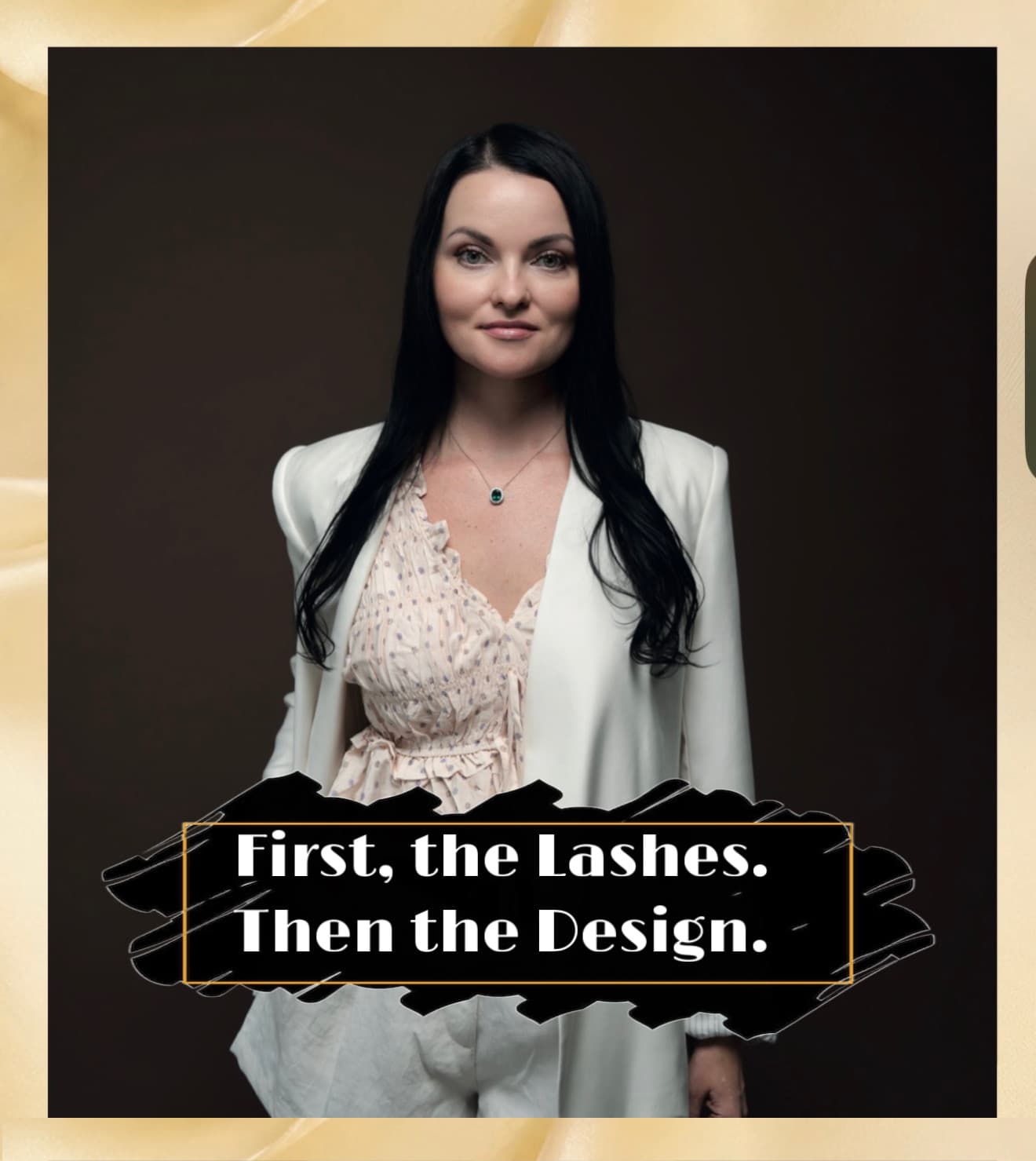
First, the Lashes. Then the Design.
Inna Bahriantseva on lash recovery, the architecture of the eye, and work that begins long before the final photo.
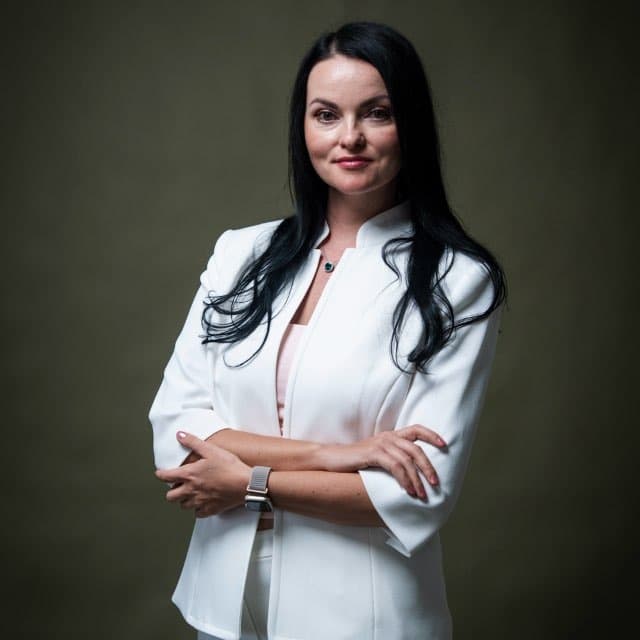
A client can sit down and ask for length. Volume. A softer look. Inna Bahriantseva.
The That That i is how the Florida-based founder of ROYAL LASHES BY INNA LLC operates: assessment first, design second. Always in that order. Her background spans esthetics training, professional lash education, and a master’s degree with honors in accounting and audit. She has spent years working with clients who arrived
after procedures that left their lashes weakened, overloaded, or simply wrong for them. In 2026, she was nominated for the Woman of Motivation award. But perhaps what defines her most is something she says out loud, without hesitation: sometimes the right answer is less, not more.
A client comes in with a specific look in mind. Where does your work actually begin?
With the condition of the lash line. A client may want length or volume I understand that completely. But before I choose anything, I need to see what her natural lashes can actually support. How strong are they? Is there thinning? Gaps? Signs of stress from previous work? Which direction are they growing? That tells me what is possible. A set can look beautiful on day one and still be the wrong choice for that person. If the weight, length, or direction is not selected carefully, the damage shows up later. So I do not
start with the trend. I start with the lashes in front of me.
When did you realize lash work was more serious than most people assume?
Pretty early. I came into the industry through formal training an esthetics program in Ukraine in 2016, then lash extension training at Velvet Volume studio in Dnipro in 2017. At first, what I loved was the creative side. I still do. The precision, the symmetry, the moment a client looks in the mirror and sees herself differently fresher, more awake. But working with real clients showed me how much responsibility this profession carries. You are not simply adding beauty. You are working with an incredibly delicate structure.
Did correction become your specialty by choice or did your clients lead you there?
My clients led me there. Women started coming to me after unsuccessful procedures. Some had visibly weakened lashes. Some had poor retention and could not figure out why. Others could not name the problem they just felt that something was off. I would look more closely and see that the lash line needed time and recovery, not another round of pressure. Sometimes a client wants drama, but her lashes need rest. That is exactly where a specialist has to be
honest. In many cases, the goal is not the strongest possible effect right now. The goal is to help the lashes recover across several appointments while still giving the client a result that feels clean, polished, and intentional.
Your LRCA method Lash Recovery and Correction Architecture. What actually happens inside
that process?
I explain it simply: first I look, then I design. LRCA is my method for working with lashes that have been weakened, overloaded, or damaged by poor-quality work. I assess the level of damage mechanical stress, gaps, broken hairs, compromisedzones, and the natural growth pattern. Then I determine what load the lash line can realistically carry. That informs everything: length, curl, diameter, weight, and the final style. Sometimes the right decision is a lighter set. Sometimes it is correction work. Sometimes it is a gradual
recovery plan where the lashes improve over time and the client never feels like the result is unfinished. Most mistakes in this industry happen when style comes before condition. In my work, condition always comes first.
What is a decision you make regularly that tends to surprise clients?
Sometimes I recommend less. Not because I want a simple result but because the lashes require it. A shorter length or softer volume can actually look more refined, wear more comfortably, and give the client’s natural lashes the space they need to recover. There is a common assumption that more equals better. In lash work, more can also mean more stress on a structure that is already compromised. A good specialist knows the difference and is willing to say so.
You hold a master’s degree with honors in accounting and audit. Does that background genuinely show up in your lash work?
More than people expect. That education trained me to notice details that others might skip, to calculate risk, and to think in systems rather than in isolated decisions. I apply the same mindset here. I do not choose a curl, a length, or a volume simply because it is trending. I think about load. I think about proportion. I think about whether the natural lash can support the design without sustaining damage. The client may simply feel that the result is lighter and more comfortable than what she has experienced before. But behind that feeling, there is real analysis.
Most lash services start with the reference photo. Yours starts where?
With how the lashes will feel several weeks from now. The final photo matters of course it does. But what I care about is what happens at the two or three week mark. Are the lashes still comfortable? Is the natural lash line still healthy? Does the set still make sense as it grows out? That is the distinction for me. I am not interested in a result that looks impressive for one day and creates
problems the next.
What are U.S. clients paying attention to right now?
They are paying attention to the person behind the service. Cleanliness, consistency, comfort, genuine professionalism these matter enormously here. Clients want lashes that fit their actual lives, not just a single photo. And they are asking better questions now: why this length? Why this style? Why not more volume?
I appreciate that shift. It pushes specialists to think more carefully and communicate more clearly. That is good for the entire industry.
What do you want other lash professionals to take away from your work?
That lash extensions can be elegant without being aggressive.
The best work is not always the heaviest or the most dramatic. Sometimes it is the set that looks effortless because every decision behind it was made with care and precision. I want more specialists to look at the lash line before they look at the trend. That is where the real work begins.
_______________________________________________
This story was reported and written by Valeriia Kizchuk for Beauty Professionals Magazine. Special thanks go to Inna Bahriantseva for her time, openness, and expert oversight throughout her insight was essential in bringing this material to its final, accurate form.