
The Return of the Fringe
After years of effortless layers and undone texture, hair is getting a shape again. A very specific one.

There is a particular kind of trend that does not announce itself. It accumulates — on runways, in street style, in the quiet shift of what clients are bringing into salons on their phones. The soft graphic fringe and the low one-length cut have been building for two seasons. In 2026, they have arrived.
After half a decade of lived-in layers, curtain bangs, and the deliberately undone aesthetic that dominated post-pandemic hair, the pendulum has swung — not to rigidity, but to intention. The fringe defining this moment is not the blunt architectural bang of the nineties. It is softer. It frames rather than dominates.
TWO TRENDS DEFINING THE SEASON
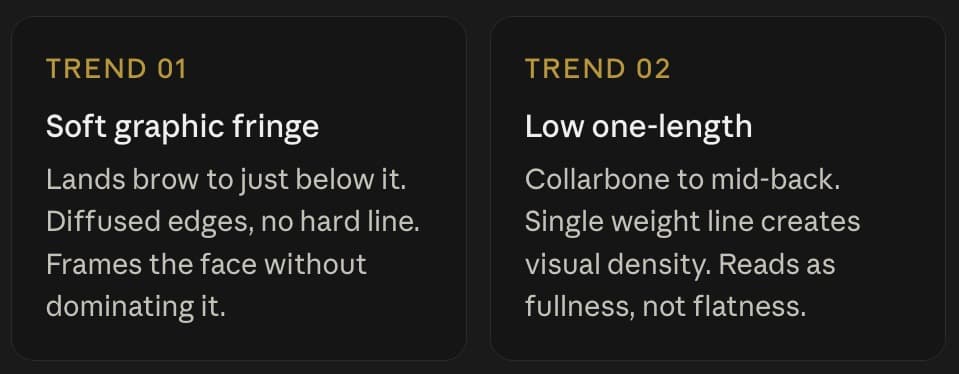
WHAT THE FRINGE IS DOING
The soft graphic fringe works because it solves a problem that layers never quite could: it gives the face a frame. Cheekbones read differently. The eye is drawn upward. The face looks intentional.
The best versions are built with internal texture that allows the fringe to sit — not flip, not separate, not require a round brush and ten minutes every morning. The client leaves the salon with something that behaves.
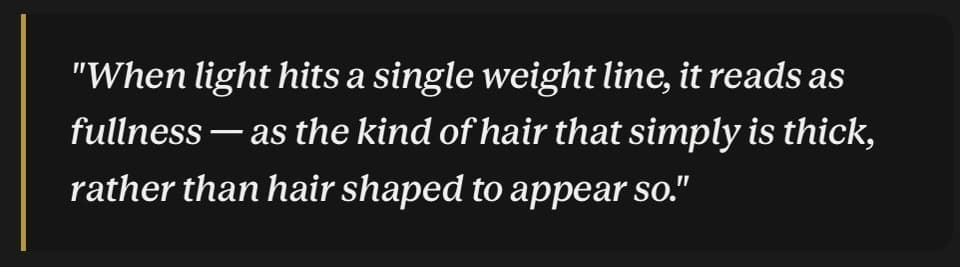
THE QUIET REVOLUTION OF ONE-LENGTH
In an era where volume has been the primary goal of most haircut consultations, a cut that removes layering seems like the wrong direction. It is actually the right one.
One-length cuts create visual density. For clients with fine or medium hair, this is a genuine revelation. For clients with thick hair, it is controlled drama. The cuts dominating this season sit at collarbone to mid-back — a degree of precision that requires a skilled hand and a sharp scissor.
WHAT THIS MEANS AT THE CHAIR
Both trends reward technical precision in a way that the effortless-layer era did not always demand. The consultation matters more here than it does with a shag or a wolf cut. Face shape, hair density, natural movement, lifestyle — all of it feeds into whether this cut works or becomes a maintenance burden.
The client sitting in front of you with a reference photo has chosen something that requires real skill to execute.