Blonde Gone Dark: The Uncomfortable Truth About “Just Dye It Darker”
Why pigment refuses to settle on lightened hair and how a controlled-layering method solves what instinct alone can’t
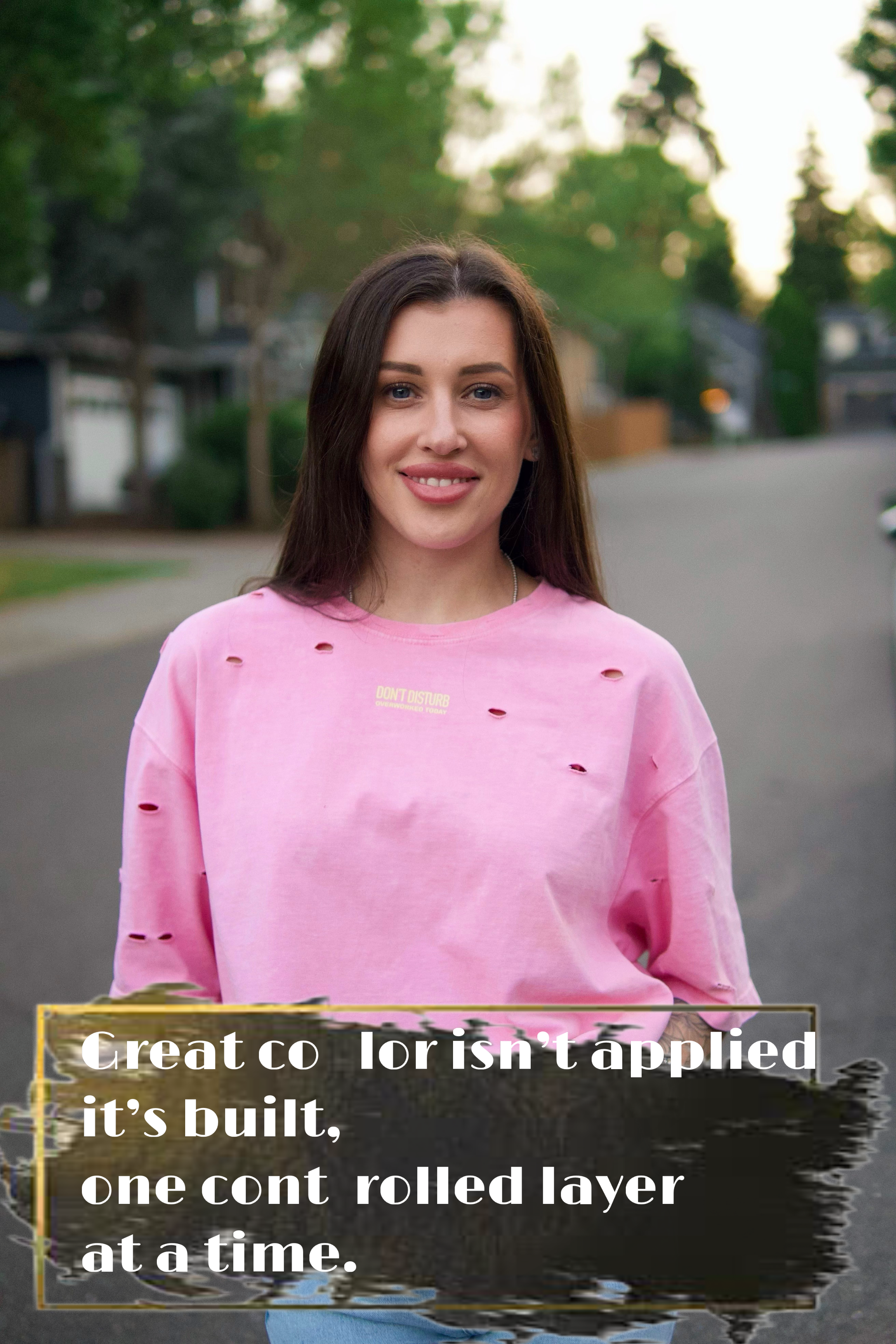
“I want to go back to dark” is a request Anna Stalmakova hears more and more often and every season, it comes with more conviction. Some clients are tired of the upkeep cost of blonde. Others want a richer, warmer tone for the season. And some arrive with a color correction they need fixed carefully, without another round of aggressive lightening.
On paper, this sounds easier than lightening: pigment isn’t being stripped away, it’s being added. In practice, it’s the opposite. Which is exactly why darkening previously lightened hair is, in Stalmakova’s view, one of the most underrated challenges in color work.
The paradox: the lighter the base, the less predictable the outcome
Lightened hair is no longer a virgin base. It’s lost a significant portion of its natural pigment, and its structure has changed along with it the cuticle turns rougher and more uneven, with porosity varying from section to section. Roots, mid lengths, and ends on the same head of hair can behave like three different textures entirely.
Apply a dark dye directly, without accounting for that unevenness, and the risk compounds. Pigment grabs unevenly, drifts cool or takes on an ashy-green cast, and within weeks fades out at different rates faster wherever porosity runs higher.
"That’s the paradox at the center of darkening blonde hair.
The lighter and drier the starting base, the harder it is to land a predictable, even dark shade."
The method: a sequence of decisions, not a single product
Over years of practice, Stalmakova developed a systematic approach she calls controlled pigment layering. Its core isn’t one “magic” formula it’s a chain of steps, where each one depends on the result of the last, not just on the original plan.
1. Diagnosis. Porosity, density, and elasticity are assessed along the full length, along with color history and how the hair actually behaves not just how it looks.
2. Structural prep. Lightened hair almost always needs rebuilding before it can take a new pigment evenly; uneven porosity guarantees uneven color otherwise.
3. Pigment redeposit. Lightening strips out the hair’s warm underlying pigments. Before building the final dark shade, some of that base needs to be restored otherwise the result risks going cool and muddy.
4. Gradual, not one-shot, darkening. Target depth is built through a series of controlled passes, checked after each one decisions get made by looking at the hair in real time, not by guessing upfront.
5. Final tone correction and aftercare. The shade gets dialed to the intended direction warm, neutral, or cool and locked in with home-care guidance that directly determines how long the color holds.
The mechanics, briefly
Without getting into the deeper chemistry (that’s a topic for a more technical piece): after lightening, the cuticle becomes porous and irregular, which makes pigment behave unpredictably unless that unevenness is addressed upfront. pH balance plays a role too a more acidic environment supports a tighter, more manageable hair structure and, in turn, more stable color retention. That’s why prep and gradual application aren’t optional extras, Stalmakova stresses they’re a technical necessity.
What the work shows
Over more than two years of using this approach, Stalmakova estimates she’s worked with roughly 50 to 100 clients across a wide range of starting damage and porosity levels. Her observations:
— color lands noticeably more evenly than with direct darkening and no prep;
— the shade holds longer before the next touch-up is needed;
— clients return less often asking to fix uneven color or correct a cool cast.
Stalmakova is upfront about the limits here: these are observations from her own practice, not findings from a formal study with a control group. Which is exactly why, she says, sharing the methodology with peers matters so it can be discussed, tested, and refined together, rather than kept as a private trade secret.
From Feel to Framework
Formalizing a technique doesn’t replace talent. It gives talent something to stand on when things go wrong.
Why formalize what you already “feel” in your hands
Plenty of strong colorists work off instinct built over years, and that’s a completely valid path. But instinct has one limitation: it’s hard to hand off to another stylist, and hard to replicate reliably when something in the process goes sideways.
Formalizing the method diagnosis → prep → pigment redeposit → gradual darkening → tone control doesn’t replace a colorist’s skill. It gives that skill a framework to lean on in difficult cases, and a shared language the professional community can pass on and build from.
That’s the conversation Anna Stalmakova is inviting by sharing the method publicly, rather than keeping it as an internal protocol within her own practice.
_______________________________________________
This story was reported and written by Valeriia Kizchuk for Beauty Professionals Magazine. Special thanks go to Anna Stalmakova for her time, openness, and expert oversight throughout — her insight was essential in bringing this material to its final, accurate form.