Balance Over Battle: How Anastasia Huk’s Method Is Redefining Acne Care
While the industry debates which active ingredient is “stronger,” esthetician Anastasia Huk is asking a different question entirely and her answer is changing how practitioners think about acne.
Why Acne Is Back at the Center of the Conversation
The beauty industry has long acknowledged that acne is “a years-long journey.” And yet it remains the single most common reason an adult walks into an esthetics practice. Clinically, some form of acne affects up to 80% of teenagers and persists in roughly 40% of adults over 25. Among women, late-onset acne (acne tarda, emerging between ages 25–40) is being diagnosed with increasing frequency.
The paradox? Professionals have more tools than ever: topical retinoids, azelaic acid, benzoyl peroxide, chemical peels, LED, phototherapy. And yet clients keep cycling from aggressive drying treatments to “miracle serums” from social media and back again.
By 2025, leading dermatologists and estheticians worldwide are reaching the same conclusion: the era of “war on skin” is over. Cutibacterium acnes antibiotic resistance has reached critical levels. Benzoyl peroxide and oral antibiotics are increasingly scrutinized for barrier disruption and reduction of microbial diversity. Into this moment steps a methodology that offers not another protocol — but a new lens. That methodology is the Acne Balance Method (ABM), developed by esthetician Anastasia Huk.
Who Is Anastasia Huk?
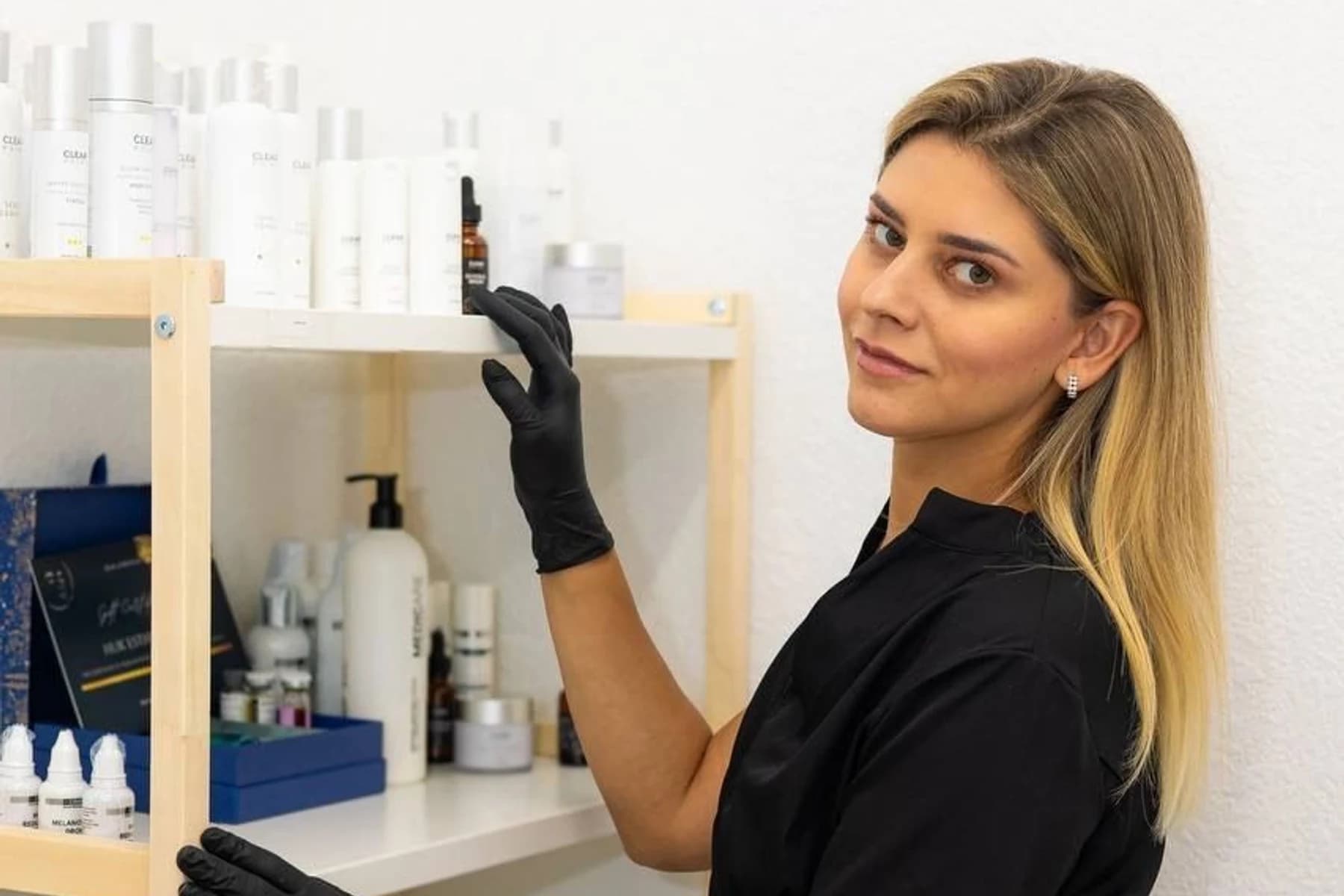
Colleagues tend to describe Anastasia in three words: calm, systematic, meticulous. Her caseload reflects it complex presentations are her specialty: teenagers post-isotretinoin with severely compromised barriers, adult women with hormonal acne, clients living with post-acne scarring and post-inflammatory hyperpigmentation, and the patients who have “tried everything” and lost faith in esthetic care entirely.
Working primarily with Russian-speaking clients both in-person and through online consultations, Anastasia developed an approach that has since spread as the Acne Balance Method. In her own words, ABM was born not in the treatment room, but through observation:
“The most beautiful results didn’t come from the strongest treatments — they came from the most consistent patients.”
That single insight became the philosophy of the entire method.
The Three Pillars of Acne Balance Method
ABM can be summarized in one sentence: Barrier first. Microbiome second. Actives third — and always stepwise.
Each pillar is a direct response to a specific failure of the conventional aggressive approach.
1. The Barrier Is the Foundation — Not a Finishing Touch
In most cases Anastasia encounters, the client doesn’t arrive with “clean” acne. They arrive with acne layered on top of an already-damaged epidermal barrier. That’s why ABM never opens with a retinoid or an acid. It opens with barrier restoration: hydrolipid mantle repair, reducing transepidermal water loss, ceramides, niacinamide.
This aligns with current international research, which consistently shows that barrier dysfunction worsens acne — and that correcting it improves tolerance of all subsequent therapy.
2. The Microbiome Is a Partner, Not an Enemy
The second pillar is a deliberate rejection of “sterilizing” thinking. A decade ago, the
strategy was “kill P. acnes.” Today it’s understood that the goal isn’t fewer bacteria — it’s a balanced microbial ecosystem in healthy communication with skin immunity.
ABM deliberately limits alcohol-based toners, alkaline cleansers, and extended topical antibiotic courses without protective measures. The skin’s microbial community is treated as an asset to be preserved, not eliminated.
3. Step-Care: Sequential, Not Simultaneous
The third pillar is structured, staged introduction of active ingredients. Retinoids don’t start in week one. Acids don’t stack on acids. Every new molecule is introduced only after the skin has demonstrated tolerance to the previous step.
This formalizes what leading dermatologists have advocated for years: actives are added to a foundational routine — never instead of one. In practice, this means a client with mild acne in ABM won’t leave their first appointment with adapalene + benzoyl peroxide + a salicylic peel + a mechanical extraction — the combination that so often sends clients home with a flare.
The Central Thesis: Home Care Is Not a Supplement
Ask Anastasia to distill ABM into one sentence, and she’ll say something close to this:
“The in-office treatment is 20% of the result. The other 80% happens at home, every day, in the client’s bathroom.”
This might sound like standard advice but the way ABM operationalizes it is anything but standard. In conventional practice, home care is something that’s “also recommended.” In ABM, it is the core of the protocol, prescribed with the same specificity as an injection plan: what product, in what order, at what dose, on which days, with which tolerance markers and which stop signals.
This isn’t a stylistic preference. European consensus guidelines explicitly confirm that correctly selected cosmeceuticals gentle cleansers, ceramides, niacinamide, adequate hydration directly improve treatment adherence and clinical outcomes. In plain terms: if you don’t break the skin at home, the in-office actives work dramatically better.
What the Data Looks Like: Compliant vs. Non-Compliant
Working systematically within the method, Anastasia has tracked the difference between clients who follow the home protocol and those who “forget,” “skip,” or “improvise.” The gap in outcomes at 12 weeks with identical in-office treatments can be as much as fourfold.
Compliant clients show: up to 70% reduction in active lesions; more even tone with reduced post-inflammatory erythema and pigmentation; a subjective sense of “calm” skin no tightness, no stinging on product application.
Non-compliant clients cycle: flare → panic → hyper-intervention → barrier damage → new flare. The phenomenon of “sterile acne” where 10-step routines dissolve the skin’s protective mantle entirely, leaving it reactive and thin is well documented and lands squarely within ABM’s observations.
Three Red Flags for Poor Compliance
Adding products between appointments usually acids, enzyme powders, or “a second retinol for extra results” sourced from social media.
Unable to recall their morning cleanser meaning cleansing is perceived as an unimportant step.
SPF only in summer, “when it’s sunny” almost a guaranteed path to locked-in post-acne pigmentation.
The ABM Arsenal
ABM is not brand-dependent Anastasia deliberately avoids tying the methodology to a single product line. But the ingredients and modalities that consistently appear in her protocols are recognizable and fully consistent with current clinical guidelines.
Home Care (Cosmeceuticals)
Azelaic acid (15–20%) the workhorse of the method: sebum regulation, anti-inflammatory, depigmenting, safe for sensitive skin, no photosensitization.
Niacinamide 4–5% barrier reinforcement, sebum reduction, gentle anti-inflammatory action, hyperpigmentation prevention.
Topical retinoids (adapalene, retinal, retinol) introduced only after barrier preparation, starting at 1–2x per week with gradual frequency increase.
BHA (salicylic acid) at low concentrations for comedonal component management.
Ceramides, panthenol, squalane in the foundational routine, especially during the introduction of actives.
SPF 30+ (mineral or non-comedogenic) year-round, non-negotiable.
In-Office Treatments
Chemical peels superficial to mid-superficial, typically multi-acid combinations (azelaic, mandelic, salicylic), delivered in courses with ongoing skin response monitoring.
Atraumatic extraction mechanical component minimized; priority given to gentle enzymatic and ultrasonic methods.
LED therapy blue light (415–470nm, antibacterial) combined with red light (630–660nm, anti-inflammatory and regenerative), particularly effective post-peel and during skin-calming phases.
The principle is the same across every tool: nothing is added “by default.” Every procedure must have a specific rationale within the current phase active inflammation, stabilization, or remission maintenance.
The ABM Home Care Checklist
Morning
Gentle pH-balanced cleanser (no alkaline, no alcohol) → hydrating serum with niacinamide or panthenol → lightweight non-comedogenic moisturizer with ceramides → SPF 30+ (mineral or hybrid)
Evening
Double cleanse if wearing makeup or SPF → active of the day: azelaic acid or retinoid per specialist protocol (not both simultaneously at the start) → barrier-repair moisturizer
Weekly
Gentle enzymatic or BHA treatment (as prescribed) with a firm prohibition on physical scrubs, alcohol toners, iodine-based spot treatments, hydrogen peroxide, or toothpaste
Working With Compliance: Practical Guidance for Fellow Practitioners
One of ABM’s strongest assets is that it addresses not just what to do with the skin but how to communicate with the client. Anastasia offers five principles that any esthetician can implement immediately.
Write home care like a prescription. Not verbal suggestions, not “look for something with niacinamide” a specific list: product, frequency, application order, tolerance markers, and stop signals. Ideally delivered in writing, with a channel for questions between appointments.
Explain the why, not just the what. A client who understands why they’re spending two weeks purely on hydration before introducing a retinoid will actually complete those two weeks. A client who was told “just do it” will not.
Use photo documentation and brief check-ins. ABM normalizes before/after photos at every appointment and a short status check every 2–3 weeks: what’s changed, what’s stinging, what’s unclear. This catches “DIY improvisation” before it becomes a flare.
Set an honest timeline. Anastasia is firm on this: promising “clear skin in a month” is a disservice to both client and method. A realistic horizon for meaningful stabilization in mild-to-moderate cases is 8–12 weeks; maintenance work extends to a year. This aligns with international practice maintenance therapy with adapalene or azelaic acid is recommended for up to 12 months.
Acknowledge the psychological dimension. Up to 40–50% of acne patients present with concurrent anxiety or depressive symptoms. The esthetician is rarely a therapist but they are often the first professional a client talks to about the issue at all. ABM accounts for this: consultations are conducted in a supportive, non-shaming tone. “You just don’t wash your face properly” has no place in this practice.
The Philosophy: Why “Balance” Is the Right Word
The word balance in ABM’s name is not a marketing frame. It represents a conscious move away from binary logic “oily skin = dry it out, inflammation = kill the bacteria” toward ecosystem thinking.
In this paradigm, skin is not a battlefield. It is a living system where sebaceous glands, microbiome, immune response, barrier function, and neurological regulation exist in dynamic equilibrium. The esthetician’s role is not to disrupt that equilibrium with another active but to help the skin return to it.
This position aligns with where the global industry is heading: skin minimalism, skin streaming, microbiome-friendly formulations, the return of gentle cleansers and barrier protection. These are no longer seasonal trends. They are the stable direction of modern dermacosmetics.
What This Means for Practicing Estheticians
Acne Balance Method is not a revolution and makes no claim to being a new brand. It is a disciplined framework that organizes tools already familiar to any practicing esthetician azelaic acid, niacinamide, retinoids, BHA, peels, LED. But the framework matters.
It protects the specialist from the temptation to “add another treatment” instead of addressing what’s happening at home. It shifts the client conversation from “give me something strong” to a shared long-term strategy. It reduces clinical risk — fewer damaged barriers, fewer cases of reactive, over-treated skin, fewer clients walking out after one bad peel.
And perhaps most distinctively: in ABM, compliance isn’t mentioned as an afterthought at the end of a consultation. It is built into the architecture of the protocol itself. In an industry where “the client will figure out their home routine” is still somehow accepted practice, that is close to a manifesto.
The most effective esthetic treatment, Anastasia Huk reminds us, is the one the client can sustain between appointments. Everything else is a matter of technique.
______________
If you have an original methodology or clinical experience with complex acne cases, the editorial team welcomes submissions for consideration in our next themed issue.
© Editorial. This material was prepared as an expert methodology review for beauty industry professionals and does not replace individual consultation with a licensed dermatologist.