
An Author’s Methodology for Men’s Haircut Design Based on Head Anatomy and Hair Growth Patterns
There is a moment at the beginning of every consultation that most clients never notice. The clippers are still on the counter. The cape is just going on. And the barber is already working.
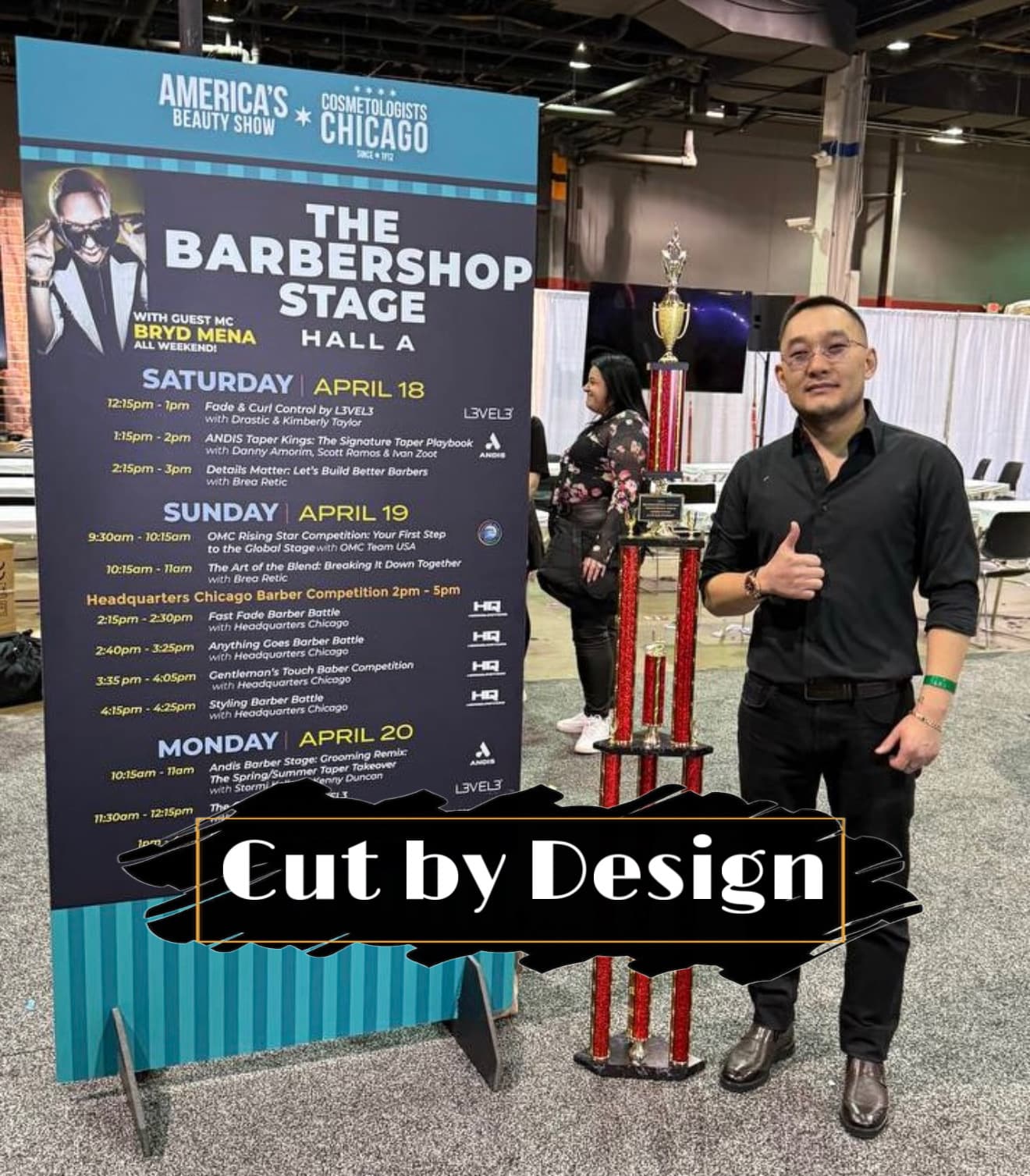
Not cutting reading. The shape of the occipital bone. The way the hair moves at the crown. A cowlick sitting at an angle that will fight every standard fade pattern ever invented. This is where the haircut actually begins. Everything that happens after is execution.
In nineteen years of professional barbering, one thing has become consistently clear: the most common reason a haircut fails has nothing to do with technique. It has to do with what happened or didn’t happen before the first pass of the clippers. A barber who skips the assessment and goes straight to the cut is, in effect, designing blindly. The result might look acceptable in the chair. Two weeks later, as the hair grows, the problems appear. This is the gap the following methodology was built to close.
Why Identical Techniques Produce Different Results
The barbering industry has changed significantly over the past decade. Clients walk in with references, expectations, and a considerably more sophisticated understanding of what they want. What has not changed is a fundamental reality of the craft: two clients can sit in the same chair, request the same haircut, and walk out looking completely different even when the technical execution was identical. The reason is anatomy. Every skull is shaped differently. Hair density varies not just between clients but across different regions of the same head. Natural cowlicks sit in locations that can make a textbook fade look uneven on one person and flawless on another. The temporal depressions, the parietal ridge, the contour of the frontal hairline these are not minor variables. They are the architecture the haircut has to work with, or against.
Ignoring them does not make them disappear. It simply means the barber discovers them mid-cut, when correcting course is considerably more difficult.
The Five Stage Methodology
What follows is a structured system developed through years of direct observation of what worked, what failed, and why. Each stage builds on the one before it. The haircut does not begin until stage two is complete.
Stage One: Anatomical Assessment
Before any tool is picked up, a comprehensive evaluation of the client’s head anatomy is performed. This means examining the occipital bone, the temporal depressions, the parietal region, any prominent areas of the skull, and the exact contour of the frontal hairline. This is not a formality. The information collected here determines the geometry of everything that follows. A barber working without this assessment is essentially applying a predetermined pattern to an unknown surface. Sometimes it works. Often, it produces the kind of subtle asymmetry that neither the barber nor the client can quite identify they only know something is off. The assessment takes minutes. The difference it makes lasts until the next appointment.
Stage Two: Hair Growth Pattern Analysis
Once the anatomy is mapped, the natural direction of hair growth is examined with equal care. Cowlicks are identified and located precisely. Areas where the growth direction changes are noted. Regions of increased density are flagged. Any zones that might complicate the fade or blending process are identified before they become problems. This stage answers one of the most important questions in barbering: how will this hair behave after it is cut? A cowlick that is ignored at this stage will make itself known. Hair that grows at an angle inconsistent with the intended style will work against it every day. Understanding these patterns before cutting allows the barber to adapt preserving additional length where the growth direction requires it, adjusting the blend to work with the hair rather than against it. The result is a haircut that looks intentional as it grows, not just on the day it was cut.
Stage Three: Hair Weight Distribution
Weight distribution is among the most underestimated elements of professional barbering and one of the most consequential. Removing too much bulk in the wrong area does not simply affect the immediate appearance of the haircut. It affects how the hair sits, moves, and maintains its shape through the entire growth cycle.
This methodology treats weight distribution as an individualized decision, not a default setting. Head shape, hair thickness, growth direction, and the client’s daily styling routine all factor into where weight is preserved and where it is reduced. The goal is structural balance a haircut that holds its silhouette not just under professional lighting, but at home, the morning after, two weeks later. Done correctly, weight distribution is invisible. Done incorrectly, it is the reason a client does not return.
Stage Four: Fade Geometry
Within this methodology, the fade is not a blending technique. It is an architectural decision. Constructing a fade that reads as smooth, balanced, and visually consistent from every angle requires more than moving through guard sizes in sequence. It requires continuous evaluation under proper lighting, from multiple angles, with ongoing symmetry checks throughout the process. The occipital and temporal regions receive particular attention, as these are the areas where individual anatomical variation most frequently produces visual asymmetry. The fade is built to complement the client’s specific head contours, not to impose a standard shape onto them. The difference, when executed well, is a result that looks natural rather than constructed as though the haircut simply belongs there.
Stage Five: Final Adaptation
The structure of the haircut is complete. The fifth stage ensures it works in the client’s actual life. This means evaluating the overall silhouette with fresh eyes, refining texture where needed, observing how the hair behaves after blow-drying, and demonstrating home styling techniques that the client can realistically replicate. It also means providing specific product recommendations, guidance on drying technique, and a realistic timeline for the next appointment.
This final stage is where the haircut transitions from a service into a lasting result. A client who understands how to maintain their haircut will maintain it. A client who leaves without that guidance will not and the haircut will reflect that within days.
WHAT THE METHODOLOGY PRODUCES
The practical outcomes of this system are consistent and measurable. Haircuts designed through this framework demonstrate greater precision, fewer visual imperfections, and a more natural appearance as the hair grows. Clients report that daily styling becomes easier and that the haircut maintains its intended shape for longer between appointments. The methodology is particularly effective with coarse hair, pronounced cowlick patterns, and clients whose cranial anatomy does not conform to standard cutting templates which, in practice, describes the majority of clients sitting in the chair. There is also a structural advantage that compounds over time. Because each stage of the process builds on the information collected in the previous one, the barber is making informed decisions at every point rather than correcting problems as they arise. The haircut becomes more efficient, more consistent, and more predictable in its outcome.
The Standard the Industry Needs
Barbering at its highest level is not the application of technique. It is the integration of technical mastery, visual intelligence, and a precise understanding of each individual client’s anatomy. The methodology presented here is the result of nineteen years of observation, refinement, and professional practice. It is also, in a meaningful sense, a response to the gap that exists between what barbering can produce and what standardized techniques routinely deliver.
Every client who sits in the chair has a skull unlike anyone else’s. A haircut that accounts for that fact that begins with assessment rather than assumption will always outperform one that does not. Not occasionally.
Consistently.
That consistency is what separates a technically capable barber from a genuinely skilled one. And it is what clients, whether they can articulate it or not, are always looking for when they decide whether to come back.
_______________________________________________
Author
Zhyrgalbek Moldogaziev
Professional Barber 19 Years of Professional Experience
Chicago, Illinois, USA