Author-Developed Techniques in Precision Hardware Manicure and Nail Restoration
The Riaba Nail Precision System™ and the V’IRELIA Forward Recovery System™

Svitlana Riaba
Independent researcher, USA
Abstract.
This article examines two author-developed professional frameworks in nail aesthetics: Riaba Nail Precision System™ (RNPS) and V’IRELIA Forward Recovery System™ (VFRS). The global nail care services market reached USD 13.1 billion in 2024 and is projected to grow at a compound annual growth rate of 7.7% through 2034, yet the professional sector faces persistent challenges related to tissue trauma, coating adhesion failures, and the absence of structured post-procedure recovery protocols. The objective of this study is to describe and analyze the conceptual foundations, procedural logic, and practical outcomes of both systems as applied in professional nail service practice. The methodology combines structured narrative review of current dermatological and occupational health literature, content analysis of industry standards, and case observation derived from the author’s long-term practice. Results show that RNPS reduces service time by approximately 50%, lowers periungual tissue trauma incidence, and decreases coating delamination rates through standardized instrument selection and procedural sequencing. VFRS addresses a documented gap in post-procedure nail care by targeting four sequential tissue layers: nail plate, cuticle, skin barrier, and deep regeneration. The findings have direct relevance for practicing nail technicians, vocational educators, product formulators, and dermatologists working in the aesthetic nail domain.
Abstract. This article examines two author-developed professional frameworks in nail aesthetics: Riaba Nail Precision System™ (RNPS) and V’IRELIA Forward Recovery System™ (VFRS). The global nail care services market reached USD 13.1 billion in 2024 and is projected to grow at a compound annual growth rate of 7.7% through 2034, while professional practice continues to face challenges related to procedural consistency, tissue-conscious technique, coating adhesion, and structured post-procedure care. The objective of this study is to describe and analyze the conceptual foundations and procedural logic of both systems in relation to current dermatological, occupational-health, and nail-technology literature. The methodology combines a structured narrative review of published literature, content analysis of relevant professional guidance, and descriptive professional-practice experience. RNPS formalizes a seven-phase hardware manicure and pedicure workflow centered on assessment, calibrated instrument use, controlled forward-direction technique, selective refinement, and quality control. VFRS organizes cosmetic post-procedure care around nail plate conditioning, cuticle and periungual support, skin-barrier support, and continued overnight maintenance. The article presents these frameworks as professional methodologies for education and future prospective evaluation; it does not claim clinical efficacy or statistically proven superiority.
Introduction
Professional nail care has moved well beyond its traditional scope as a cosmetic grooming service. Across the United States and globally, the nail salon sector represents a multibillion-dollar industry whose growth reflects broader cultural shifts toward self-care, wellness integration, and individual expression [1, 2]. The U.S. nail salon market was valued at USD 2.66 billion in 2023 and is forecast to reach USD 4.88 billion by 2033 at a compound annual growth rate of 6.26% [7]. Globally, the nail care services market is projected to grow from USD 13.1 billion in 2024 to USD 27.5 billion by 2034 [8]. These numbers reflect not only demand but also professional opportunity: the nail technician workforce in the United States surpassed 365,000 workers in 2023 and is expected to expand at 12% annually through 2033 [4].
Despite this expansion, the sector continues to operate without widely adopted procedural standards for hardware-assisted services. Hardware manicure and pedicure, which rely on electric handpieces (e-files) operating at speeds between 3,000 and 30,000 RPM, are among the fastest-growing service categories in professional nail care [9]. Their efficiency and precision advantages are well recognized; however, so are the associated risks when technique is inadequate. Periungual tissue trauma, nail plate thinning, cuticle disruption, and coating delamination remain frequent complaints associated with improperly executed hardware procedures [2, 5, 6]. A key contributor to these complications is the gap between industry growth and the quality of available training. As noted in dermatological literature, the majority of nail aesthetic procedures are performed by practitioners with insufficient knowledge of nail anatomy and tissue physiology [3].
A parallel gap exists on the recovery side. Systematic post-procedure care for nails, cuticles, and periungual skin is rarely incorporated into standard salon workflows, despite well-established dermatological evidence showing that skin and nail barrier disruption following mechanical procedures requires structured intervention for full recovery [5, 12]. This absence creates conditions for dryness, brittleness, and long-term tissue degradation that reduce the durability of results and client satisfaction.
Limitations of this study should be noted at the outset. The article draws on the author’s professional practice observations and available published literature rather than a formally registered clinical trial. Quantitative outcome data for the proposed systems remain in the collection phase, as educational deployment of RNPS began recently. The article does not aim to establish clinical efficacy in the medical sense but rather to formalize and analyze a professional methodology that can guide subsequent empirical research. The study addresses an underexamined domain where practitioner-developed frameworks can provide practical reference points for industry professionals and researchers alike.
The findings described here are relevant for practitioners, vocational educators, salon owners, beauty product developers, and public health professionals working on occupational wellness in the nail service sector. For the United States specifically, where the nail technician workforce is large, diverse, and underserved by consistent training standards, the development of structured author-driven methodologies contributes to the broader effort of professionalizing the industry and improving health outcomes for both clients and technicians. The specialized expertise required to develop such systems reflects a form of technical innovation that, when documented and shared, adds to the knowledge infrastructure that supports workforce development and sectoral competitiveness.
The objective of this study is to present, analyze, and contextualize two original professional frameworks: Riaba Nail Precision System™ (RNPS) as a structured approach to hardware manicure and pedicure, and V’IRELIA Forward Recovery System™ (VFRS) as a four-stage post-procedure tissue restoration protocol. The scientific novelty of the work lies in the first systematic description and analytical justification of these two integrated author-developed frameworks as a combined approach addressing both procedural execution and post-procedure recovery in professional nail services. The working hypothesis is that standardized procedural sequencing in hardware nail services, combined with structured post-procedure tissue recovery, measurably reduces adverse outcomes and improves the durability of cosmetic results relative to unstructured practice.
The objective of this study is to present, analyze, and contextualize two original professional frameworks: Riaba Nail Precision System™ (RNPS) as a structured approach to hardware manicure and pedicure, and V’IRELIA Forward Recovery System™ (VFRS) as a structured cosmetic post-procedure care framework. The scientific novelty of the work lies in the systematic description and analytical justification of these two integrated author-developed frameworks as a combined approach addressing procedural execution and post-procedure care in professional nail services. The working proposition is that standardized sequencing, controlled instrument use, and structured aftercare provide a reproducible basis for professional practice that can be evaluated prospectively in future observational research.
Materials and Methods
The methodological design combines three complementary approaches: a structured narrative review of current academic and industry literature, content analysis of professional documentation relevant to nail-service safety and training, and descriptive professional-practice experience. Together, these approaches provide theoretical grounding and practical contextualization of the proposed systems. This article is a professional-methodology analysis and not a registered systematic review, randomized study, or clinical trial.
A structured narrative review of peer-reviewed and industry literature was conducted using PubMed, PubMed Central, and Google Scholar. Search terms included hardware manicure, nail plate trauma, periungual tissue injury, gel nail adhesion, nail technician occupational health, skin barrier restoration, cuticle care, nail cosmetics complications, UV-curable nail formulations, and nail salon market. Market intelligence reports from Grand View Research [1, 11], Technavio [9], and Market.us [8] were used for industry context. Occupational-health and procedural-safety sources, including NIOSH-related literature and ClinicalTrials.gov [19], were also consulted where relevant. The literature component is used to contextualize the author-developed frameworks rather than to claim an exhaustive evidence synthesis.
The content-analysis and descriptive components drew on publicly available professional guidance and the author’s accumulated experience in hardware manicure and pedicure, professional competition judging, and structured nail-technology education. Practice experience informed the organization and teachability of RNPS and VFRS; however, no retrospective complication rates or clinical efficacy percentages are reported in this article. Quantitative prospective evaluation with predefined outcome measures is identified as a future research step.
Results and Discussion
To understand the context in which RNPS and VFRS were developed, it is useful to begin with the market data. The professional nail care sector is not a niche industry but a large and growing one, particularly in the United States. Figure 1 illustrates the projected global trajectory of nail care services through 2034, based on published market research data.
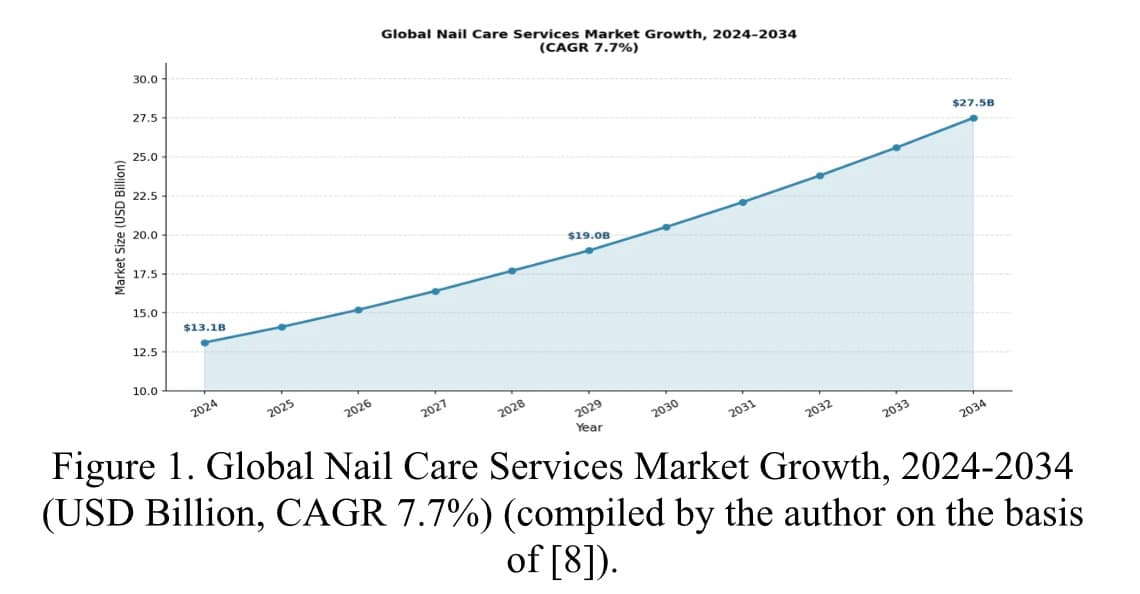
The data confirm that the global nail care services market, valued at USD 13.1 billion in 2024, is on a trajectory toward USD 27.5 billion by 2034 [8]. North America accounts for over 33% of this market, with the U.S. nail salon segment alone projected to grow from USD 2.66 billion in 2023 to nearly USD 4.88 billion by 2033 [7]. The manicure and pedicure service segment represented USD 6.52 billion globally in 2024 and remains the core revenue driver [9]. These figures illustrate both the commercial scale of the sector and the magnitude of the professional workforce affected by any improvement in procedural standards.
Despite this scale, the industry faces what can fairly be described as a standardization deficit. Published dermatological literature notes consistently that the majority of nail aesthetic procedures in salon settings are performed by practitioners who lack formal training in nail anatomy or tissue physiology [2]. Hygiene standardization in salons remains inconsistent, leading to complications including paronychia, nail plate dystrophy, and matrix injury [3]. The occupational health dimension adds another layer of concern: more than 375,000 nail technicians in the United States face daily exposure to volatile organic compounds, and musculoskeletal symptoms from repetitive strain and awkward postures are reported at high rates in the professional population [4, 10].
Against this background, the absence of structured, documented procedural frameworks for hardware nail services is not a minor gap. It is a gap that affects the health of clients, the health of practitioners, the durability of cosmetic results, and the professional credibility of the sector. RNPS and VFRS were developed precisely to address this gap from within professional practice, by systematizing knowledge that effective practitioners accumulate through experience and making it teachable and transferable.
The Riaba Nail Precision System is a seven-phase protocol for hardware-assisted manicure and pedicure organized around tissue-conscious technique, instrument rationality, directional consistency, and result reproducibility. A defining technical principle is controlled e-file work in one forward working direction during precision cuticle and periungual refinement, avoiding repeated direction switching within the same working sequence. This principle is intended to make handpiece movement more predictable, reduce unnecessary repeated passes, and provide a teachable procedural standard. Figure 2 presents the procedural algorithm in visual form.
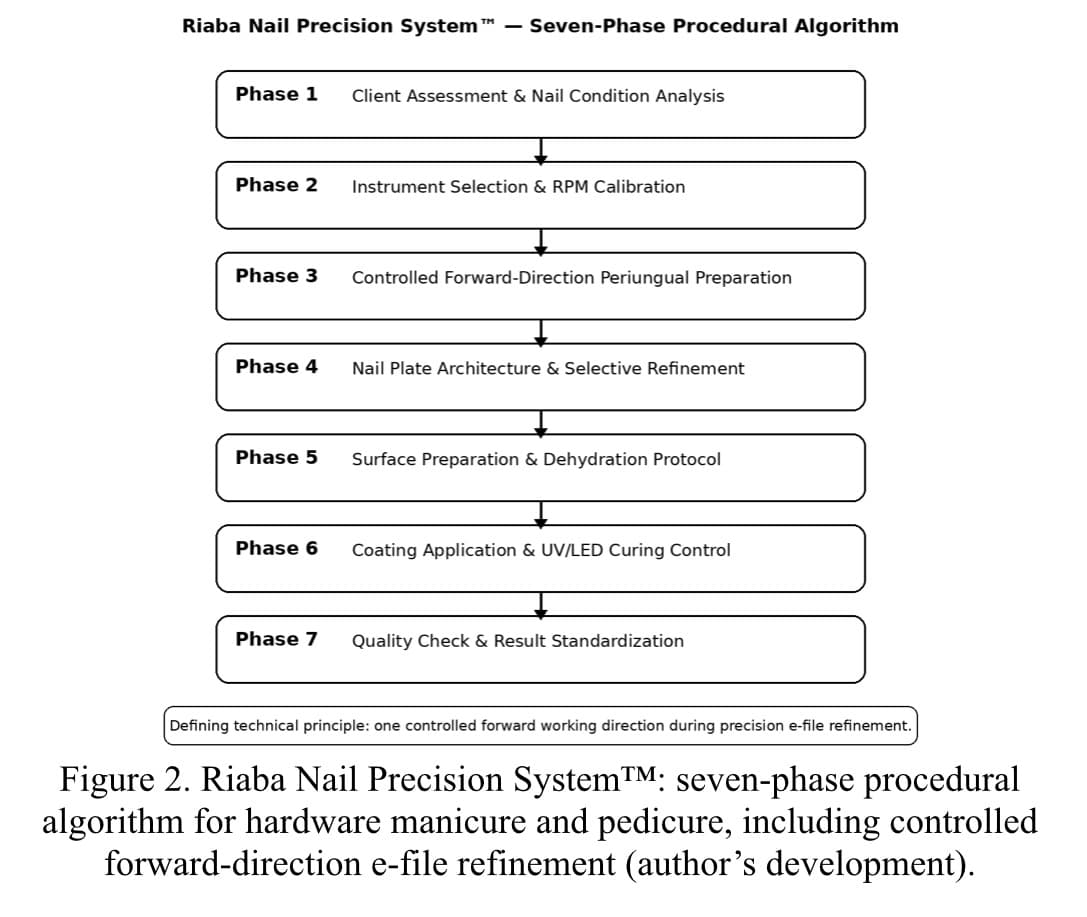
The sequence begins with client assessment and nail condition analysis, which includes evaluation of nail plate thickness, cuticle condition, presence of contraindications (such as active infection, nail psoriasis, or recent trauma), and prior service history. This phase is not simply procedural formality. It determines the choice of instruments, abrasive grit levels, and operating speeds for all subsequent phases. A client with thin, brittle nails requires fundamentally different parameter settings than one with healthy, dense nail plates. The absence of this diagnostic step in routine practice is one of the primary reasons for inconsistent outcomes and tissue damage in hardware manicure as currently performed across the industry [17].
Phase 2 addresses instrument selection and RPM calibration. Professional e-files operate across a range of 3,000 to 30,000 RPM, and the appropriate speed varies not only by instrument type but by tissue zone and individual nail condition. RNPS specifies calibrated speed ranges for each phase of the service, reducing reliance on practitioner intuition and providing a reproducible baseline. Brushless, low-vibration motor handpieces are specified for all precision work, consistent with current occupational health guidance on minimizing Hand-Arm Vibration Syndrome risk in nail technicians [10].
Phases 3 through 5 address the core of the hardware procedure: periungual tissue preparation, nail plate architecture, and surface refinement. The key innovation in RNPS at these phases is the concept of selective tissue removal, which distinguishes between the dorsal nail plate layers that can be safely refined and the deeper layers that must be preserved to maintain structural integrity. This directly addresses the most common cause of nail plate thinning in hardware services [16]. Abrasive grit specifications of 180 to 240 grit for surface refinement are consistent with published guidance on nail plate preparation for gel adhesion enhancement [14]. The lateral grooves and free edge receive specific attention as zones of elevated trauma risk.
Phase 6 governs coating application and UV/LED curing control. This phase incorporates published knowledge on acrylate chemistry and adhesion promotion mechanisms. Research on UV-curable nail formulations confirms that surface cleanliness, dehydration protocol execution, and the choice of adhesion promoter are the primary determinants of coating longevity [13, 15]. RNPS translates these chemical insights into a practical protocol that a trained technician can execute consistently without requiring laboratory-level chemical knowledge.
Phase 7 completes the service with a structured quality check and result standardization step. This is not standard practice in most salon environments, where the service ends at the final coating application. The inclusion of a formal review step in RNPS reflects the system’s orientation toward reproducibility: a technician who cannot evaluate the outcome of their work against a defined standard cannot improve toward that standard consistently.
Rather than presenting unverified complication frequencies, Table 1 summarizes the core technical principles of RNPS and the professional purpose of each component. The table describes the structure of the methodology and does not represent clinical outcome data.
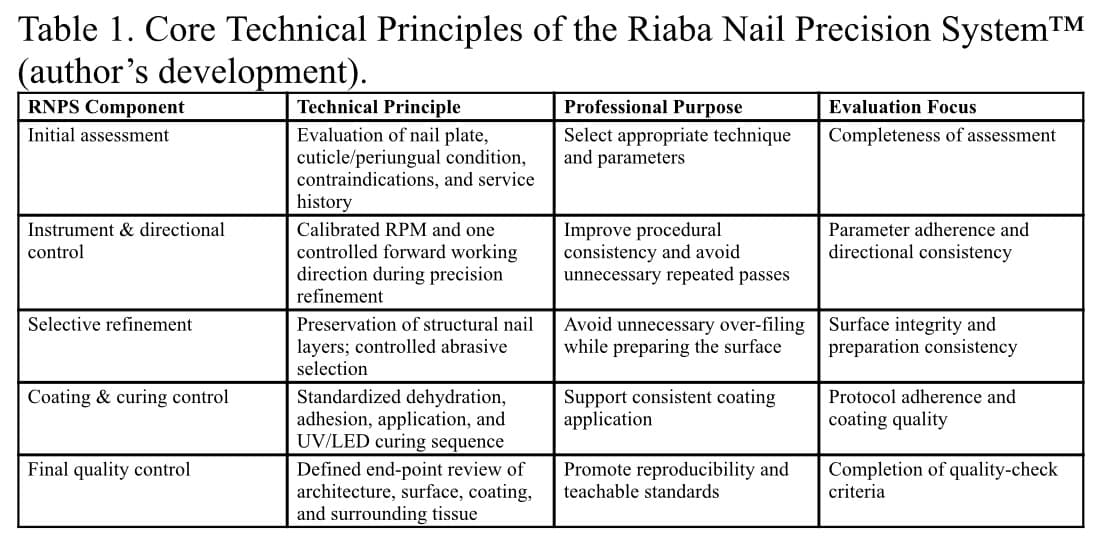
Table 1 presents RNPS as a reproducible professional workflow rather than as a claim of treatment efficacy. Each component has a defined technical purpose and a corresponding evaluation focus that can be measured in future prospective studies. This distinction allows the methodology to be described and taught without converting practice-based experience into unsupported clinical percentages.
Service efficiency remains a relevant future evaluation domain, but a fixed percentage reduction is not claimed here. Procedure duration can vary with nail condition, service complexity, technician experience, product system, and design requirements. A prospective RNPS evaluation should therefore record baseline service time, RNPS service time, case complexity, operator experience, and predefined quality criteria before drawing comparative conclusions.
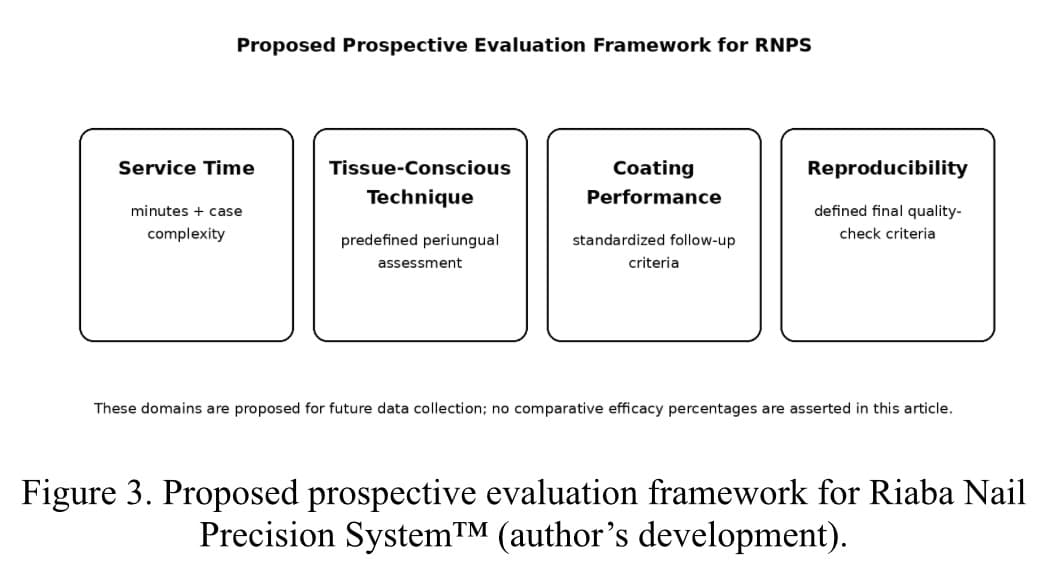
Figure 3 defines four domains for future prospective evaluation: service time, tissue-conscious technique, coating performance, and reproducibility of the finished result. Recording these outcomes with a predefined sample, standardized criteria, and transparent follow-up would allow the professional framework described here to be tested quantitatively in subsequent research.
The V’IRELIA Forward Recovery System addresses a practical gap in the professional nail-service workflow: structured cosmetic post-procedure care. Published dermatological literature supports the importance of moisturization and surface-barrier support after procedures that can contribute to dryness or barrier disruption [5, 12]. VFRS translates these general principles into a nail-service context without claiming treatment of disease, penetration into deep tissues, or clinical regeneration.
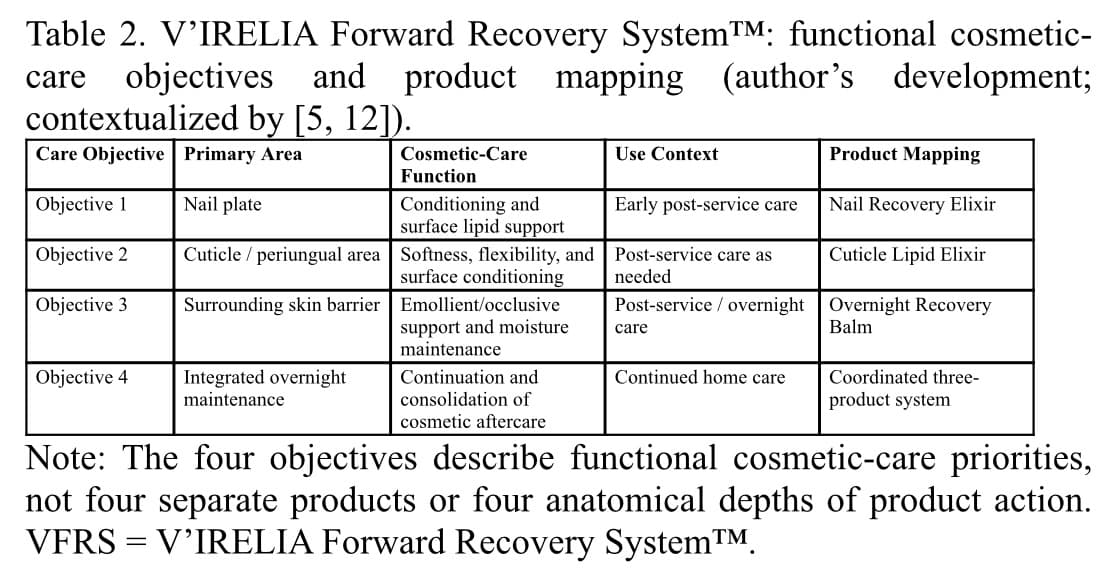
VFRS is organized as a three-product home-care system supporting four functional care objectives: nail plate conditioning, cuticle and periungual support, surrounding skin-barrier support, and continued overnight maintenance. The four objectives describe care priorities rather than four anatomical depths or four separate products. Figure 4 presents this structure, and Table 2 summarizes the intended cosmetic-care functions.
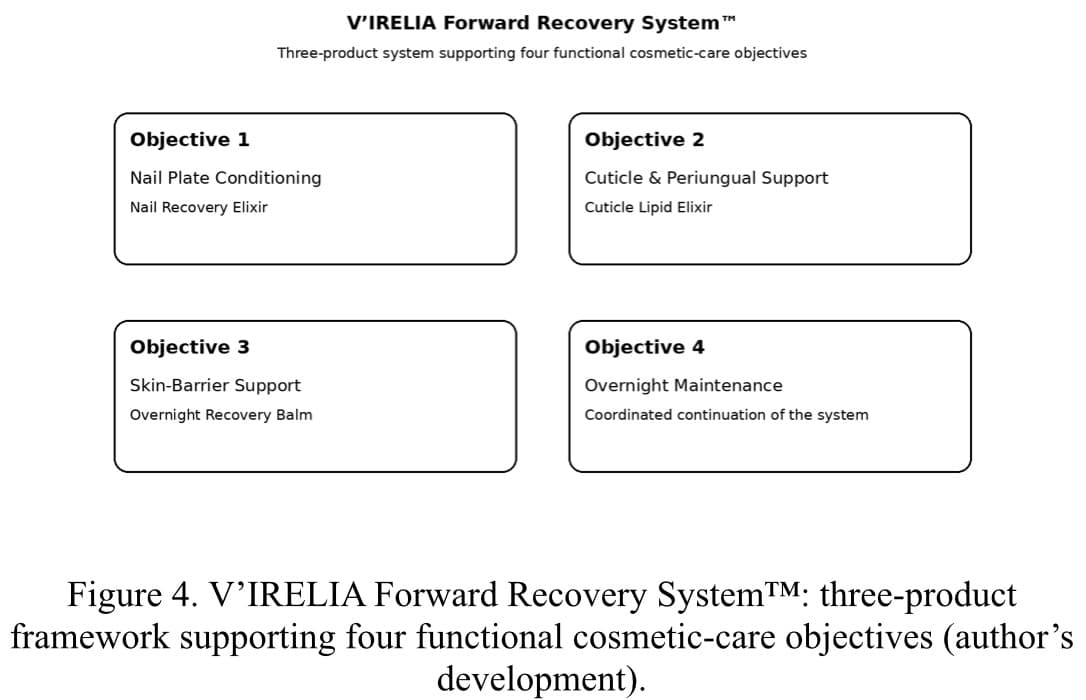
Objective 1 focuses on nail plate conditioning after cleansing and mechanical refinement. The Nail Recovery Elixir is positioned as a cosmetic conditioning step intended to support a well-conditioned nail surface and reduce the appearance and sensation of dryness or brittleness. The rationale is consistent with general principles of moisturization and surface lipid support described in barrier-care literature [5, 12].
Objective 2 focuses on the cuticle and surrounding periungual area. The Cuticle Lipid Elixir is intended to support softness, flexibility, and surface conditioning in this zone. The framework does not claim treatment of inflammatory disease or tissue injury; suspected infection, significant inflammation, or other contraindications require appropriate professional or medical evaluation.
Objective 3 extends cosmetic care to the surrounding skin barrier of the hands or feet. Repeated cleansing, solvent exposure, and filing dust can contribute to surface dryness. The Overnight Recovery Balm is used as an emollient and occlusive support step intended to help maintain moisture and improve the conditioned feel of the surrounding skin, consistent with established principles of stratum corneum moisturization [5, 12].
Objective 4 is continued overnight maintenance rather than a claim of action in the dermis or other deep tissue layers. It formalizes continuity of cosmetic aftercare through coordinated use of the three-product system according to post-service needs. No claim of collagen stimulation, microcirculation activation, disease treatment, or deep-tissue regeneration is made.
The following table summarizes the principal evidence domains used to contextualize the two professional frameworks. It is intended as an evidence map rather than a quantitative bibliometric analysis.
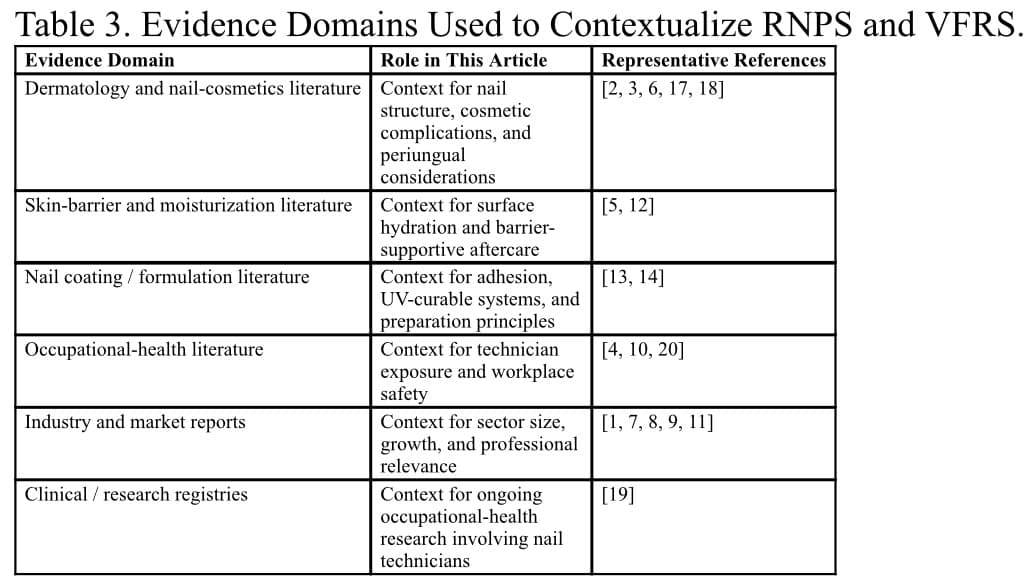
RNPS and VFRS are best understood as complementary phases of a professional nail-service framework rather than as medical interventions. RNPS governs the service phase by structuring assessment, instrument use, refinement, coating, and quality control. VFRS governs cosmetic home care after the procedure by organizing conditioning and barrier-supportive steps. Their integration links procedural consistency with clear aftercare guidance while preserving the distinction between professional nail services and medical treatment.
From a client-experience perspective, this integration extends the appointment into a structured home-care routine. A client who leaves a hardware manicure with VFRS home-care guidance receives clear instructions for coordinated use of the three products during the post-service period. This approach may support consistency of cosmetic maintenance and client education; comparative effects on retention or durability require separate prospective evaluation.
The educational dimension of RNPS and VFRS is also relevant here. Both systems were developed not only for personal practice but as teachable frameworks. Their value as educational tools depends on the degree to which they can be transferred to other practitioners with different levels of baseline skill. The structured sequencing of RNPS makes it particularly well suited to this purpose: a student learning the seven-phase protocol can work through each phase with a defined endpoint, which reduces the ambiguity that makes learning procedural skills difficult in unstructured environments. Published research on professional nail education confirms that standardized pedagogical frameworks for instructors are currently lacking in the sector and that this gap complicates the integration of clinical knowledge into training programs [18, 20].
Based on the analysis presented above, the following recommendations are offered to practitioners, educators, and industry stakeholders in the professional nail service sector in the United States and internationally.
First, the incorporation of nail condition assessment as a mandatory first step in any hardware service should be treated as a professional baseline, not an optional refinement. The diagnostic information gathered at this step determines the safety and appropriateness of all subsequent actions. Salon intake processes and training curricula should reflect this requirement explicitly [19].
Second, structured post-procedure cosmetic care can be incorporated into professional nail-service education and client guidance. This does not require medicalized claims or complex instructions. It requires clear, product-appropriate directions that emphasize conditioning, moisturization, and surface-barrier support. VFRS provides one author-developed framework for organizing such guidance [5, 12].
Third, professional education programs for nail technicians in the United States should incorporate basic dermatological knowledge of nail anatomy, tissue physiology, and skin barrier function as core competencies. The current structure of cosmetology licensing curricula varies significantly by state and does not consistently include this content. The work of researchers at Texas A&M University on culturally appropriate occupational health training for nail technicians points in the right direction and deserves broader adoption [4, 20].
Fourth, the professional nail service industry in the United States would benefit from the development of voluntary technical standards for hardware-assisted services, analogous to infection control standards that have been adopted through regulatory frameworks. The February 2025 acquisition of robotics startup Clockwork by CND, aimed at piloting automated manicure stations to standardize service quality, signals that technology-driven standardization is already entering the market [9]. Practitioner-developed methodological frameworks like RNPS are a complementary approach that addresses the human-skill dimension of this same standardization objective.
Conclusion
This article has described and analyzed two author-developed professional frameworks for hardware nail services: Riaba Nail Precision System™ and V’IRELIA Forward Recovery System™. Both systems were developed through sustained professional practice, competitive experience at the championship level, and observation-based refinement over multiple years of client work and practitioner training.
The objectives stated in the abstract have been addressed. The conceptual foundations of RNPS and VFRS have been described in detail, and their procedural logic has been analyzed in relation to current dermatological, occupational-health, nail-coating, and professional-practice literature. The analysis positions RNPS as a structured procedural methodology and VFRS as a structured cosmetic aftercare framework. Neither system is presented here as having established clinical efficacy; instead, the article defines the frameworks clearly enough to support teaching, replication of the workflow, and future prospective evaluation.
The market data confirm that the professional nail service sector is growing rapidly, particularly in North America, and that this growth creates both opportunity and urgency for professional standardization. A workforce of more than 365,000 nail technicians in the United States, working in a sector projected to reach USD 4.88 billion by 2033, cannot rely on informal knowledge transfer as its primary training mechanism. Documented, teachable frameworks of the type described in this article have a practical role to play in raising the quality and safety floor of professional nail services.
The practical significance of this work lies primarily in its utility for practitioners and educators. RNPS provides a structured sequence intended to improve procedural consistency and teachability without requiring equipment beyond standard professional hardware. VFRS provides a three-product, four-objective cosmetic aftercare framework that translates established principles of conditioning and surface-barrier support into salon-context guidance. Together, they illustrate how practitioner expertise can be formalized into transparent, testable professional methodologies.
The next steps in this research program include prospective collection of RNPS outcome data using predefined measures, formal documentation of VFRS product specifications and cosmetic-performance observations, and potential collaboration with academic or dermatology partners on appropriately designed observational studies. Such work would be required before causal, comparative, or clinical-efficacy claims could be made. The trademark registrations for Riaba Nail Precision System™ and V’IRELIA BEAUTY™ currently in process provide an intellectual-property framework for further research and educational development.
References
1. Grand View Research. (2024). Nail salon market (2024–2030) size, share & trends analysis report by service, end-user, age group, region, and segment forecasts. Grand View Research. Retrieved from: https://www.grandviewresearch.com/industry-analysis/nail-salon-market-report (date accessed: March 12, 2026).
2. Tyagi, M., & Singal, A. (2024). Nail cosmetics: What a dermatologist should know! Indian Journal of Dermatology, Venereology and Leprology, 90(2), 178–185. https://doi.org/10.25259/IJDVL_77_2023
3. Bansal, S., Nanda, S., Bansal, S., & Grover, C. (2025). Dermatologist driven aesthetic nail enhancement. Indian Dermatology Online Journal, 16(1), 72–80. https://doi.org/10.4103/idoj.idoj_504_24
4. Rosemberg, M.-A. S., Le, A. B., Luu, M., & Nguyen, T. (2024). An online training module to increase knowledge and awareness of chemical exposures and safety measures among nail salon workers. Journal of Occupational and Environmental Medicine, 66(9), 766–771. https://doi.org/10.1097/JOM.0000000000003153
5. Rajkumar, J., Chandan, N., Lio, P., & Shi, V. (2023). The skin barrier and moisturization: Function, disruption, and mechanisms of repair. Skin Pharmacology and Physiology, 36(4), 174–185. https://doi.org/10.1159/000534136
6. Wang, E., & Lipner, S. R. (2024). Adverse effects of do-it-yourself nail cosmetics: A literature review. Skin Appendage Disorders, 10(3), 180–185. https://doi.org/10.1159/000536381
7. Spherical Insights. (2025). United States nail salon market size, growth, forecasts to 2033. Spherical Insights. Retrieved from: https://www.sphericalinsights.com/reports/united-states-nail-salon-market (date accessed: March 28, 2026).
8. Market.us. (2025). Nail care services market size, share and forecast 2025–2034. Market.us. Retrieved from: https://market.us/report/nail-care-services-market/(date accessed: April 7, 2026).
9. Technavio. (2025). Nail salon market size forecast 2025–2029: Growth, trends, and key insights. Technavio. Retrieved from: https://newsroom.technavio.org/nail-salon-market (date accessed: April 15, 2026).
10. Song, X., Wang, S., Liu, X., Ma, X., Chen, H., & Yang, Y. (2024). Occupational exposure of nail technicians to industrial chemicals: A pilot study. Environmental Pollution, 361, 124791. https://doi.org/10.1016/j.envpol.2024.124791
11. Grand View Research. (2024). Nail treatment products market (2024–2030) size, share & trends analysis report by product, end-use, distribution channel, region, and segment forecasts. Grand View Research. Retrieved from: https://www.grandviewresearch.com/industry-analysis/nail-treatment-products-market-report (date accessed: May 4, 2026).
12. Madnani, N., Deo, J., Dalal, K., Benjamin, B., Murthy, V. V., Hegde, R., & Shetty, T. (2024). Revitalizing the skin: Exploring the role of barrier repair moisturizers. Journal of Cosmetic Dermatology, 23(5), 1533–1540. https://doi.org/10.1111/jocd.16171
13. Mieriņa, I., Grigale-Sorocina, Z., & Birks, I. (2025). The chemistry of behind the UV-curable nail polishes. Polymers, 17(9), 1166. https://doi.org/10.3390/polym17091166
14. Grigale-Sorocina, Z., Birks, I., & Novicka, E. (2024). Examining adhesion promoters in UV-cured nail coatings: A comprehensive investigation into composition, polymerization, and performance characteristics. Materials Science (Medžiagotyra), 30(4), 467–472. https://doi.org/10.5755/j02.ms.35927
15. Avila-Alvarez, A. M., Gomez-Vargas, L. M., & Velez-Pelaez, M. C. (2022). The nail bed: Theories of its functioning and therapeutic mechanisms of dermabrasion. Journal of Skin and Stem Cell, 9(1), e123012. https://doi.org/10.5812/jssc-123012
16. Axler, E., Neubauer, Z., & Lipner, S. R. (2024). At-home technique for debridement of nail plate thickening. JAAD Case Reports, 52, 127–129. https://doi.org/10.1016/j.jdcr.2024.07.002
17. Bansal, S., & Grover, C. (2024). Adverse effects of nail cosmetics and how to prevent them. CosmoDerma, 4, 44. https://doi.org/10.25259/CSDM_23_2024
18. Beylin, D., Kornhaber, R., Le Lagadec, D., & Cleary, M. (2025). Assessing the health implications of UV/LED nail lamp radiation exposure during manicure and pedicure procedures: A scoping review. International Journal of Dermatology, 64(4), 659–666. https://doi.org/10.1111/ijd.17669
19. U.S. National Library of Medicine. (2024). Evaluation of nail technicians with Quick Exposure Check (NCT06695819). ClinicalTrials.gov. Retrieved from: https://clinicaltrials.gov/study/NCT06695819(date accessed: June 11, 2026).
20. Jia, T., Keller, A. A., Gao, L., Liu, W., Liu, S., Xu, X., Yin, F., He, Y., Mao, T., Deng, J., Hussain, J., & Chen, C. (2024). Organophosphate ester exposure in nail salons: Health implications for workers. Environmental Pollution, 362, 125013. https://doi.org/10.1016/j.envpol.2024.125013